Showing posts with label antebellum. Show all posts

Sunday, August 2, 2020

Southern Belle Fashionistas

365080_300 365673_300
Below are images featuring my favorite costumes worn by two Southern Belle characters in fiction - Scarlett O'Hara from Margaret Mitchell's 1936 novel and its 1939 movie adaptation, "GONE WITH THE WIND"; and Ashton Main from John Jakes' 1982-1987 literary trilogy and its 1985-1994 television adaptation, "NORTH AND SOUTH" Trilogy:


SOUTHERN BELLE FASHIONISTAS


I may have mixed feelings about the 1939 movie, “GONE WITH THE WIND”, I cannot deny that I really liked some of the costumes designed by Walter Plunkett for the story's protagonist, Scarlett O'Hara Hamilton Kennedy Butler.  Here are my five (5) favorite costumes:


Wedding Dress - The dress that Scarlett wore when she married Charles Hamilton
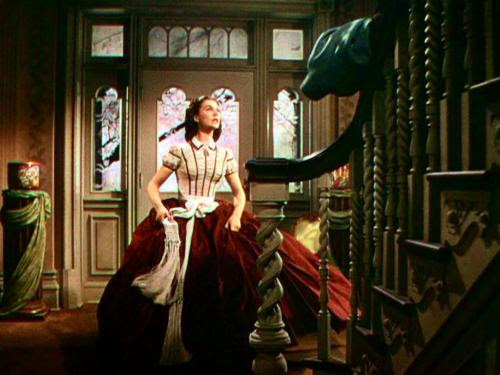


Christmas 1863 Dress - Scarlett wore this outfit when she bid good-bye to Ashley Wilkes at the end of his army furlough around the Christmas 1863 holiday.


Marriage Announcement Dress - She wore this dress when she informed her sisters and the Wilkes about her marriage to second husband, Frank Kennedy.


Businesswoman Dress - Scarlett wore this outfit in one scene featuring her role as manager of her second husband Frank Kennedy’s sawmill.
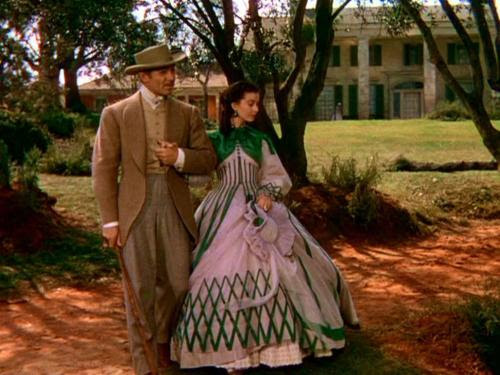


Post-Honeymoon Visit to Tara Dress - Scarlett wore this dress when she and third husband Rhett Butler visited Tara following their honeymoon.


Sawmill Visit Dress - Scarlett wore this dress when she paid a visit to Ashley Wilkes, who was manager of the sawmill she had inherited from Frank Kennedy.

************************************************************************* 

I am a fan of the ABC adaptations of John Jakes’ “NORTH AND SOUTH” Trilogy.  Among my favorite costumes worn by the character, Ashton Main Huntoon Fenway, and designed by Vicki Sánchez, Robert Fletcher and Carol H. Beule.  Here are my favorite costumes: 
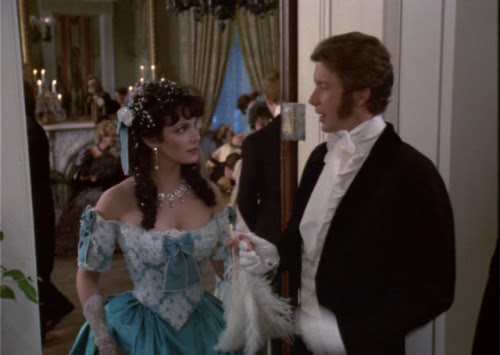

image


Mont Royal Ball Gown - Ashton Main wore this gown at the ball held at her family’s plantation during the summer of 1854.


image


Wedding Gown - Ashton wore this gown when she married her first husband, James Huntoon in 1856.
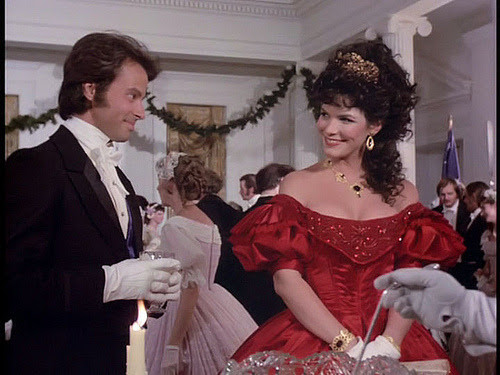


image


Richmond Ball Gown - Ashton Huntoon wore this ballgown when she met Elkhannah Bent at a reception held in Richmond, Virginia in July 1861.


image


Day Dress - Ashton wore this dress during her first visit to Elkhannah Bent’s Richmond home during the summer of 1861 and when she was married to salesman Will Fenway in 1866-67.


image


Huntoon Reception Dress - Ashton wore this dress at a reception she and her husband James Huntoon had hosted at their Richmond home in November 1861.


image


Evening Dress - Ashton wore this dress during an evening visit to Bent’s Richmond home in August 1862.


image


Travel Dress - Ashton wore this dress during a visit to her family’s plantation, Mont Royal, in August 1863.


image


Factory Visit Dress - Ashton wore this dress when she paid a visit to her husband Will Fenway’s Chicago piano factory in 1868.

Thursday, May 28, 2020

Spoonbread

Gluten-Free-Sweet-Corn-Spoon-Bread.jpg

Below is an article about the American dish known as Spoonbread:


SPOOONBREAD

The dish known as spoonbread is a cornmeal-based specialty that is prevalent in the American South. Although named a "bread", the dish is closer in consistency and taste to many savory puddings, like Britain's Yorkshire pudding. According to some recipes, spoonbread is similar to a cornmeal soufflé. However, most Southern recipes for this dish do not involve whipping the eggs to incorporate air.

The first published recipe for Spoonbread appeared in a book written by Sarah Rutledge in 1847. Another recipe appeared in the cookbook called "Practical Cook Book ", written by a Mrs. Bliss of Boston in 1850. She called the dish, "Indian puffs". However, Spoonbread dates long before the Antebellum period. European colonists probably first learned about the dish from Native tribes along the Atlantic seaboard. The traditional South Carolina low country version of Spoonbread was called Awendaw (or Owendaw). It was named after a Native settlement outside of Charleston.

Although Spoonbread dated back many centuries, it became very popular with American around the turn of the 20th century. And the town of Berea, Kentucky has been home to an annual Spoonbread Festival, which has been held in September since 1997.

Below is a recipe from the Epicurious.com website for Fresh Corn Spoonbread:


Corn Spoonbread

Ingredients

2 cups whole milk
1/3 cup yellow cornmeal
1 1/2 cups fresh corn kernels (from 2 to 3 ears)
1 tablespoon unsalted butter
1 teaspoon salt
4 large eggs, separated


Preparations

Preheat oven to 425°F.

Bring milk, cornmeal, corn kernels, butter, and salt to a boil in a 3-quart heavy saucepan over moderately high heat, stirring frequently, and simmer, stirring constantly, until thickened, 3 to 4 minutes. Remove from heat and cool 5 minutes, stirring occasionally, then whisk in yolks.

Beat whites and a pinch of salt with an electric mixer at medium speed just until soft peaks form. Whisk one fourth of whites into cornmeal mixture in pan to lighten, then fold in remaining whites gently but thoroughly. Spread mixture evenly in a buttered 9 1/2-inch deep-dish glass pie plate or 1 1/2-quart shallow casserole and bake in middle of oven until puffed and golden, 15 to 20 minutes. Serve immediately (like a soufflé, spoon bread collapses quickly).


Saturday, April 18, 2020

"BARBARY COAST" (1935) Review

10499474_3


"BARBARY COAST" (1935) Review

I have seen a good number of television and movie Westerns in my time. But I find it rather odd that it is hard - almost difficult - to find a well known story set during the California Gold Rush era. And I find that rather surprising, considering many historians regard it as one of the most interesting periods in the history of the American Old West. 

Of the movies and television productions I have come across, one of them is the 1935 Western, "BARBARY COAST". Directed by Howard Hawks and adapted from Herbert Asbury's 1933 book, the movie told the story about one Mary Rutledge, a young woman from the East Coast who arrives in 1850 San Francisco to marry the wealthy owner of a local saloon. She learns from a group of men at the wharf that her fiancĂ© had been killed - probably murdered the owner of the Bella Donna restaurant, one Louis Chamalis. Upon meeting Chamalis at his establishment, Mary agrees to be his companion for both economic and personal reasons. She eventually ends up running a crooked roulette wheel at the Bella Donna and becoming Chamalis' escort. But despite her own larceny, Mary (who becomes known as "the Swan), becomes disenchanted with Chamalis' bloody methods of maintaining power within San Francisco's Barbary Coast neighborhood. He even manages to coerce a newspaper owner named Colonel Cobb, who had accused Chamalis of a past murder, into keeping silent. During a morning ride in the countryside, Mary meets and falls in love with a handsome gold miner named Jim Carmichael. Life eventually becomes more difficult for Mary, as she finds herself torn between Jim's idyllic love and Chamalis' luxurious lifestyle and his obsessive passion for her.

Judging from my recap of "BARBARY COAST", it is easy to see that the movie is more than just a Western. It seemed to be part crime melodrama, part romance, part Western and part adventure story. "BARBARY COAST" seemed to have the makings of a good old-fashioned costume epic that was very popular with Hollywood studios during the mid-to-late 1930s. If there is one scene in the movie that truly personified its epic status, it is one of the opening sequences that featured Mary Rutledge's arrival in San Francisco and her first meeting with Louis Chamalis. Mary's first viewing of the socializing inside the Bella Donna is filled with details and reeked with atmosphere. Frankly, I consider this scene an artistic triumph for both director Howard Hawks and the movie's art director, Richard Day.

"BARBARY COAST" went through four screenwriters and five script revisions to make it to the screen. The movie began as a tale about San Francisco's Barbary Coast, but ended up as a love triangle within the setting. This was due to the Production Code that was recently enforced by Joseph Breen. The latter objected to the original screenplay's frank portrayal of the San Francisco neighborhood's activities. By changing the screenplay into a love story in which the heroine finds redemption through love for a decent sort, the filmmakers finally managed to gain approval from Breen. Although Ben Hecht and Charles MacArthur were credited as the movie's writers, screenwriters Stephen Longstreet and Edward Chodorov also worked on the script, but did not receive any screen credit. Personally, I had no problems with this choice. Thanks to Hawks' direction, moviegoers still managed to get a few peeps on just how sordid and corrupt San Francisco was during the Gold Rush. 

The movie also benefited from a first-rate cast led by Miriam Hopkins, Edward G. Robinson and Joel McCrea. I would not consider their performances as memorable or outstanding, but all three gave solid performances that more or less kept the movie on track. I found this a miracle, considering the emotional rifts that seemed to permeate the set during production. As it turned out, Robinson and Hopkins could barely stand each other. However . . . there were moments when Robinson and McCrea's performances were in danger of being less than competent. Robinson nearly veered into the realm of over-the-top melodrama while conveying his character's jealousy in the movie's last twenty minutes. And McCrea came off as a bit of a stiff in most of his early scenes. Only with Walter Brennan, did the actor truly conveyed his sharp acting skills. As for Hopkins . . . well, she gave a better performance in this movie than she did in the film for which she had earned an Oscar nomination - namely "BECKY SHARP"

The movie also featured competent performances from the likes of Walter Brennan, Frank Craven, Harry Carey, and Donald Meek. But if I had to give a prize for the most interesting performance in the film, I would give it Brian Donlevy for his portrayal of Louis Chamalis' ruthless enforcer, Knuckles Jacoby. Superficially, Donlevy's Knuckles is portrayed as the typical movie villain's minion, who usually stands around wearing a menacing expression. Donlevy did all this and at the same time, managed to inject a little pathos in a character who found himself in a legally desperation situation, thanks to his loyalty toward his employer.

But you know what? Despite some of the performances - especially Brian Donlevy's and the movie's production values, I did not like "BARBARY COAST". Not one bit. There were at least two reasons for this dislike. One, I was not that fond of Omar Kiam's costume designs - namely the ones for Miriam Hopkins. The problem with her costumes is that Kiam seemed incapable of determining whether the movie is set in 1850 or 1935. Honestly. A peek at the costume worn by the actress in the image below should convey the contradicting nature of her costume:

barbary-coast-mccrea-hopkins-024 

8033ddf76fc6614db1b1ef944be4303f

The other . . . and bigger reason why I disliked "BARBARY COAST" is that the plot ended up disappointing me so much. This movie had the potential to be one of the blockbuster costume dramas shown in movie theaters during the mid-to-late 1930s. If only Joseph Breen and the Censor Board had allowed the filmmakers to somewhat follow Asbury's book and explore the colorful history of San Francisco from the mid-1840s to the California Gold Rush period of the early-to-mid 1850s. Despite the colorful opening featuring Mary Rutledge's arrival in San Francisco and the subplot about the Louis Chamalis-Colonel Cobb conflict, "BARBARY COAST" was merely reduced to a 90 minute turgid melodrama about a love triangle between a gold digger, a villain with a penchant for being a drama queen, and stiff-necked gold miner and poet who only seemed to come alive in the company of his crotchety companion. To make matters worse, the movie ended with Mary and Jim Carmichael floating around San Francisco Bay, hidden by the darkness and fog, while evading the increasingly jealous Chamalis, before they can board a clipper ship bound for the East Coast. I mean, honestly . . . really? 

I have nothing else to say about "BARBARY COAST". What else is there to say? Judging from the numerous reviews I have read online, a good number of people seemed to have a high regard for it. However, I simply do not feel the same. Neither director Howard Hawks; screenwriters Ben Hetch and Charles MacArthur; and a cast led by Miriam Hopkins, Edward G. Robinson and Joel McCrea could prevent me from feeling only disappointed. Pity.

Wednesday, July 3, 2019

TIME MACHINE: John Brown's Christmas Raid Into Missouri


TIME MACHINE: JOHN BROWN'S CHRISTMAS RAID INTO MISSOURI

When people think of 19th century abolitionist John Brown, they would usually bring up his activities against pro-slavery factions in the Kansas Territory in the mid 1850s, especially the lethal attack he had led against five pro-slavery settlers near Pottawatomie Creek in May 1856. Or they would especially bring up the famous raid on the federal armory at Harpers Ferry, Virginia (West Virginia), with the intent to start a slave liberation movement. However, toward the end of the 1850s, Brown became known for another raid that led him from Missouri to the Canadian border. 

On December 19, 1858; a biracial Missouri slave named Jim Daniels had encountered one George Gill, a free black man who happened to be one of Brown's lieutenants near the Missouri-Kansas border. Daniels complained to Gill that his owner Harvey Hicklan planned to sell his wife and children, along with another slave. This sale threatened to break up his family. Gill informed Brown, who saw Daniels' situation as an opportunity for a raid to liberate slaves and strike a blow for abolitionism. Earlier, he had conveyed his plans for an anti-slavery raid into the South, via the Appalachian Mountains to his Northern-born abolitionist supporters. But they had dismissed the idea as unrealistic and advised Brown to return to Kansas and lie low. However, Brown saw Daniels' plea to help prevent his family from being sold as an opportunity. He believed this raid and the 1,100 mile exodus to Canada would provide a good deal of press attention for his cause. 

Brown's previous activities, especially the Pottawatomie Creek killings had made him persona non grata with many Americans - including a good number of abolitionists - by late 1858. Many Southerners wanted him captured or dead. His return to Missouri soil had infuriated many citizens of that state. By December 20, Brown had managed to gather twenty (20) riders to lead this latest raid into Western Missouri. He split his followers into three groups in order to free neighboring blacks on the same trip. Brown's group held up Harvey Hicklan at gunpoint, extracted Jim Daniels and the latter's family and took some of Hicklan's possessions to support the freed slaves. Brown sent a second group to John Larue's nearby farm t liberate four slaves and kidnap Larue as a hostage. A third group, led by Aaron Stevens (another Brown lieutenant), surprised David Cruise at his farmhouse and liberated a female slave. Believing that Cruise was reaching for a weapon, Stevens shot him dead.

Cruise's death transformed the raid from a rescue into an act that infuriated Kansans, Missourians and Southerners. The act, the slave escapes and Larue's kidnapping led to a great deal of negative press by the newspapers in those regions. Missouri's governor, Robert Marcellus Stewart, offered a reward of $3,000 for Brown's capture. Because of the publicity, Brown's efforts to lead the fugitive slaves and his men through Kansas and up north became increasingly difficult. Brown and his men were forced to keep the fugitives hidden inside the homes of anti-slavery supporters in the area near Osawatomie, Kansas for a month. One of the fugitives, a woman who happened to be pregnant around the time of her rescue, gave birth to a baby boy, who was named after Brown. However, the abolitionist, his men and the fugitives realized that none of them were safe, especially after nearly being spotted by pro-slavers on two separate occasions. On January 20, 1859; Brown, his men and fugitives resumed their journey north by heading for the Kansas-Nebraska Territory border.

Despite the negative press that covered Brown's journey; Brown, his men and the fugitives continued to receive aid from local anti-slavery supporters. On the night of January 24, 1859; Brown, Gill, eleven fugitives and the newborn baby had arrived at the farm of Major James Abbott near Lawrence, Kansas. Abbott provided them with food, clothing and fresh horses before they resumed their journey. Brown and his companions were nearly captured, following their arrival in Topeka, during a severe snowstorm. They were forced to spend the night at a nearby village called Holton. The following day, the party - including the remaining raiders - reached Spring Creek. Unfortunately, the water was too high for crossing by wagon or horseback. Brown was nearly in a state of panic, for he had learned both a local posse and one sent by Missouri's governor were waiting for them. Brown and his party managed to slip away to Fuller's Crossing . . . where a large posse of around one hundred men awaited them.

Brown remained calm and led his party across the raging creek. Following the crossing, the raiders and the fugitive slaves became engaged in a gun battle with eighty members of the posse. In a bold move, Brown and his party charged the posse members and drove the latter out of the area. The posse members were so intent upon retreating that two men rode some of their horses, digging their boot spurs into the animals. Ironically, there were no fatalities during the incident. Not only was it reported by the press, but also dubbed in newspapers as "the Battle of the Spurs".

After traveling through the eastern half of the Nebraska Territory, Brown and his party reached the free state of Iowa. Brown had used the state as a hideout during his anti-slavery activities in 1855 and 1856. Although they were allowed shelter in some of the Iowans' homes, they were not allowed to remain longer than one night, due to David Cruise's death. However, Brown and his party received friendlier receptions in communities like Des Moines, Grinnell and Springdale. Brown and fellow raider John Henry Kagi were nearly captured when they made an overnight visit to Iowa City. On March 9, Springdale's citizens accompanied Brown's party to West Liberty, where the latter boarded a railroad box car to Chicago, Illinois. They arrived in the latter city on March 11, at 3:30 a.m.

The party remained at the home of private detective and future Secret Service leader and Presidential bodyguard, Allan Pinkerton. The detective hid them at his home and at two other houses for several days, as he tried to raise funds for the raiders. Ironically, Pinkerton managed to raise a good deal of cash from fellow members of the Chicago Judiciary Convention, when he blurted out John Brown's presence in the city. 

After raising $600 dollars, Pinkerton and his son conveyed Brown, the fugitives and the raiders to the Chicago railroad station. They boarded a boxcar for Detroit, Michigan. Upon their arrival in Detroit, the fugitive slaves and most of the raiders boarded a ferry that conveyed them across the Detroit River into Canada and freedom. Only Brown remained in the United States. After bidding them farewell, he headed for Oberlin, Ohio in order to visit the imprisoned rescuers involved in the Oberlin-Wellington Rescue.

The Christmas 1858 Raid of 1858 led to a 1,100 mile journey from Missouri, through Kansas Territory, Nebraska Territory, Iowa, Illinois, Michigan and finally Canada. The raid provided a great deal of national press coverage for John Brown. President James Buchanan offered a reward of $250 for Brown's capture. Missouri Governor Robert Marcellus Stewart continued to offer a reward of $3,000. The raid convinced Brown's Northern abolition supporters that his plan for a raid into the South via the Appalachian Mountains in order to lead the slaves into a major rebellion might work. Seven months later, John Brown led his famous raid to Harper's Ferry, Virginia.

Saturday, June 8, 2019

"BARBARY COAST" (1935) Photo Gallery

10499474_1

Below are images from "BARBARY COAST", the 1935 adaptation of Herbert Asbury's 1933 book. Directed by Howard Hawk, the movie starred Miriam Hopkins, Edward G. Robinson and Joel McCrea:


"BARBARY COAST" (1935) Photo Gallery

2c606e49cef271c3de52592a26eedfc7


7dafb2da3a1b5188c47b2b5cbea5fc6a


4913e


8033ddf76fc6614db1b1ef944be4303f


10499474_1


10499474_3


81986398_o


barbary_coast


barbarycoast5


barbary-coast-1935-L-cfJEtj


barbary-coast-1935-L-J_S6Ae


barbary-coast-mccrea-hopkins-024


barbary-coast-mccrea-hopkins-044


Brennan


Dickensian


WinnerBadShirt


zoom_1425585159_Barbary_Coast_1935_9@2x

Wednesday, May 22, 2019

Chicken Fried Steak

VF0507H_chicken-fried-steak_s4x3

Below is an article about the American dish known as Chicken Fried Steak


CHICKEN FRIED STEAK

For years, I had avoided consuming a dish known as Chicken Fried Steak. For reason that now elude me, I tend to regard it as some dish that was nothing more than a great deal of fat and little meat, breaded and fried. During a trip to a local family restaurant, I decided to give it a chance and to my surprise, I became an immediate fan.

Chicken Fried Steak is basically associated with American South cuisine. Some believe that the dish's name originated with the fact that the meat (actually steak) is fried in oil that had already been used for fried chicken. Others claim that the name originated from the fact that the steak is prepared with the same method for cooking fried chicken. Chicken Fried Steak resembles several European dishes like Austria's Wiener Schnitzel, Italy's Milanesa and Scotland's Collops.

It is possible that Chicken Fried Steak owed its origins to the Wiener Schnitzel. German and Austrian immigrants from Europe first settled in Texas during the 1830s. Many Texans claim that some of these immigrants eventually moved to Lamesa, the seat of Dawson County on the Texas South Plains in the mid-to-late 1850s. The citizens of Lamesa claim their town as the birthplace of Chicken Fried Steak. But it is not the only claim. The citizens of Bandera, Texas (located in the region known as the Texas Hill Country) claim that one of their citizens, John "White Gravy" Neutzling, had invented the dish.

Below is the recipe for "Chicken Fried Steak" from the Cooking Channel website (courtesy Tom Perini/Perini Ranch Steakhouse):


Chicken Fried Steak

Ingredients

Steak:
3 pounds (about 6 ounces each) rib eye steaks, 1/2-inch thick
3/4 cup milk
1 egg, beaten
2 to 3 cups flour
2 teaspoons seasoning salt
1 teaspoon freshly ground black pepper
Canola oil

Gravy:
3 heaping tablespoons flour
2 cups cold milk
Kosher salt and freshly ground black pepper


Preparation

For the steak: Trim any remaining fat off the steaks and, using a mallet or rolling pin, pound out the steaks to 1/4-inch thick. 

Beat together the milk and egg in a shallow dish and set aside. Place the flour in a shallow dish, season well with the seasoning salt and pepper and set aside. 

Cover the bottom of a large skillet, preferably cast iron, with enough oil to reach about 1/2-inch up the pan. Heat over medium-high heat.

Coat the steaks in the egg mixture, then the flour and then add to the pan. Cook until the juices begin to surface and the bottom is nice and brown, 2 to 3 minutes. Flip the steaks and cook another 2 to 3 minutes more. Be careful to not overcook. Continue this process until all the steaks are cooked, placing the finished steaks on a paper towel-lined baking sheet. 

After frying the steaks, prepare to make the gravy: Let the drippings in the pan sit until the excess browned bits of seasoning settle to the bottom of the skillet. Pour off most of the oil, leaving about 4 tablespoons behind with the brown bits. Add the flour, stirring until well mixed. Place the skillet back over medium-high heat and slowly add the milk while stirring constantly. Cook until the gravy comes to a boil. Season with salt and pepper. Serve with chicken fried steak.

Wednesday, March 6, 2019

"CALIFORNIA" (1947) Review

california1947 - b


"CALIFORNIA" (1947) Review

I am a history nut. And one of my favorite historical periods that I love to study is the Antebellum Era of the United States. One of my favorite topics from this period is the California Gold Rush. I also love movies. But despite this love, I have been constantly disappointed by Hollywood's inability to create a first-rate movie about Gold Rush. 

I may have to take back my comment about Hollywood's inability to produce a first-rate movie or television production about the Gold Rush. There were at least three that managed to impress me. Unfortunately, the latest film about the Gold Rush that I saw was Paramount Pictures' 1947 film, "CALIFORNIA". And it did not impress me.

Directed by John Farrow, "CALIFORNIA" told the story of how California became this country's 31st state. The story, written by Frank Butler and Theodore Strauss, is told from the viewpoints of a handful of characters - a female gambler/singer named Lily Bishop, a former U.S. Army officer-turned-wagon train guide named Jonathan Trumbo, a former slave ship captain and profiteer named Captain Pharaoh Coffin, and a Irish-born farmer named Michael Fabian. The movie starts in 1848 Pawnee Flats, Missouri in which female gambler Lily Bishop is ordered by the town's female citizens to leave, when someone accuses her of cheating. She manages to join a wagon train bound for California, due to the generosity of a westbound emigrant named Michael Fabian. Unfortunately, the wagon train's guide, Jonathan Trumbo and a few other emigrants object to Lily's presence on the train. Lily and Trumbo become attracted to each other, but the latter's refusal to face his feelings get in the way. Before the wagon train can reach the Sacramento Valley, a traveler reveals the discovery of gold at Sutter's Mill to the emigrants. Despite Trumbo's efforts, the emigrants abandon the train and rush toward the goldfields. Lily departs with another gambler named Booth Pannock, who injured Trumbo with a whip. By the time the latter reaches the Sacramento Valley with Fabian, he discovers that Lily and Pannock are employed by a former sea captain-turned-businessman Captain Pharaoh Coffin at his saloon in Pharaoh City.

Trumbo learns from the former emigrants that Pharaoh not only control the countryside - including the goldfields - that surround Pharaoh City. He also realizes that he is still in love with Lily, despite her growing relationship with Pharaoh. Lily realizes that despite her attempt to view Pharaoh as a man worthy of her love, he is still a ruthless and manipulative tyrant determined to take control of the entire California territory. Even worse, Pharaoh is haunted by his past as a slave ship captain and has a tendency to lapse into psychotic ramblings. Matters between Trumbo and Pharaoh becomes even more heated when the former decides to organize political opposition to Pharaoh by convincing Fabian to run as a delegate for the Monterey convention on statehood. As supporters for California statehood, both Trumbo and Fabian could end Pharaoh's dreams of a West Coast empire.

One of the descriptions of "CALIFORNIA" described it as an "epic" account of how California became a state. It occurred to me that this could have been the perfect narrative for a two-to-three hour film or a miniseries. But a historical epic crammed into a 97-minute film? It finally hit me that the narrative for "CALIFORNIA" was simply too much and too vague for a 97-minute Western. The movie could have worked well if the story had been about a wagon train trek to California . . . or the Gold Rush experiences of the main characters . . . or simply a political drama about California becoming a state. But to cram all three potential narratives into a movie with the running time of a B-oater was just ridiculous. And if I must be brutally frank, this short running time, combined with so many subplots and an inability to focus on one particular theme really damaged this film. Another aspect about "CALIFORNIA" that really turned me off was the amount of songs featured in it. There were times - especially in the film's first five to ten minutes - when I wondered if I was watching a Western or a musical. The movie's opening sequence featured some overblown tune about pioneers with a montage of westbound emigrants on the Oregon and California trails. To make matters worse, not long after the dispersed Fabian-Trumbo wagon train reach California, audiences are subjected to another pretentious musical montage about those same pioneers being caught up in the search for gold.

And it seemed such a pity. "CALIFORNIA" really had a first-rate cast. Barbara Stanwyck, whom I consider to be one of the greatest actresses in Hollywood film history, was perfectly cast as the bad good-woman Lily Bishop. After all, this was a role that she had played to perfection in previous films. A good number of critics felt that the Welsh-born Ray Milland was miscast as Jonathan Trumbo. I would have agreed that he seemed miscast on paper. But . . . watching this movie made me remember that Trumbo was not some frontiersman who had been raised on the Western plains. He was an educated man, probably born and raised on the East Coast, and a former Army officer. And Milland not only pulled it off, he also proved to be a first-rate action man and generated a great deal of heat with Stanwyck, especially in scenes in which their characters engaged in some kind of psuedo-masochistic courtship. I was surprised to see that George Coulouris also had a strong screen chemistry with Stanwyck. He also did a great job in portraying the ruthless, yet slightly psychotic Captain Pharaoh. Although, I feel that the portrayal of his madness went over-the-top in one of the movie's final scenes. And Barry Fitzgerald was perfect as the compassionate, yet strong-willed farmer, Michael Fabian. His character could have been a one-note good guy, but Fitzgerald infused a good deal of charm and energy into the role, making it one of my favorites in the movie. The movie also featured solid supporting performances from Albert Dekker, Frank Faylen, Gavin Muir and yes . . . even Anthony Quinn. I am reluctant to include Quinn, because of his limited appearance in the movie. He still managed to give an excellent performance.

"CALIFORNIA" had other virtues. One glance at the movie's opening scenes pretty much told me that this was a beautiful looking movie. And the man responsible for the film's sharp and colorful look was cinematographer Ray Rennahan, who had already won two Oscars for his work on 1939's "GONE WITH THE WIND" and 1941's "BLOOD IN THE SAND". The artistry that Rennahan poured into his previous work was pretty obvious in the photography for "CALIFORNIA", as shown in the images below:

california1947-c california1947-d

The movie also featured excellent work from the team responsible for the art direction, Roland Anderson and Hans Dreier; and the two set decorators, Sam Comer and Ray Moyer. I also enjoyed the costumes designed by Edith Head (for Stanwyck and the movie's other actresses) and Gile Steele (for Milland and the movie's other actors). Both Head and Steele did a pretty solid job of re-creating the fashions of the late 1840s, even if I did not particularly found them mind blowing. I certainly enjoyed Victor Young's lively score for the movie. However, I have mixed feelings for the songs written by Earl Robinson and E.Y. "Yip" Harburg. I found the songs written for the movie's montages - "California" and "The Gold Rush" rather pompous and overblown. But I have to admit that two of their other songs - "I Should 'A Stood in Massachusetts" and "Lily-I-Lay-De-O" very entertaining.

I have come across reviews of the movie that accused John Farrow of uninspired or flawed direction. Mind you, I found nothing particularly special about his direction. I thought he did a solid job. But I doubt that he or any other director could have risen about the rushed and overstuffed screenplay penned by Frank Butler and Theodore Strauss. If the pair had stuck to one particular theme for this movie, the latter could have been a decent and entertaining piece of work. Instead, audiences were left with an overblown and pretentious story stuffed into a movie with a 97-minute running time. What a shame! What a shame.