Showing posts with label history. Show all posts

Monday, August 9, 2021

"TITANIC" (1953) Review

 1953-titanic


"TITANIC" (1953) Review

As many moviegoers know, there have been numerous film and television productions about the maiden voyage and sinking of the R.M.S. Titanic on April 15, 1912. The most famous production happens to be James Cameron's 1997 Oscar winning opus. However, I do wonder if there are any fans who are aware that another Titanic movie managed to strike Oscar gold.

Directed by Jean Negulesco, the 1953 movie "TITANIC" focused on the personal lives of a wealthy American family torn asunder by marital strife, a deep secret and the historic sinking of the Titanic. Family matriarch Mrs. Julia Sturges and her two children, 17 year-old Annette and 10 year-old Norman board the R.M.S. Titanic in Cherbourg, France. Julia hopes to remove her children from the influence of a privileged European lifestyle embraced by her husband Richard and raise them in her hometown of Mackinac, Michigan. Unfortunately, Richard gets wind of their departure and manages to board the Titanic at the last moment by purchasing a steerage ticket from a Basque immigrant and intercept his family. The Sturges family also meet other passengers aboard ship:

*20 year-old Purdue University tennis player Gifford Rogers, who falls for Annette
*the wealthy middle-aged Maude Young (based upon Molly Brown)
*a social-climbing snob named Earl Meeker
*a priest named George S. Healey, who has been defrocked for alcoholism
*American businessman John Jacob Astor IV and his second wife Madeleine


Julia and Richard clash over the future of their children during the voyage. Their conflict is reinforced by Annette's budding romance with college student Gifford Rogers and a dark secret revealed by Julia. But the couple's conflict eventually takes a back seat after the Titanic strikes an iceberg during the last hour of April 14, 1912.

There seemed to be a habit among moviegoers lately to judge historical dramas more on their historical accuracy than on the story. As a history buff, I can understand this penchant. But I am also a fan of fiction - especially historical fiction. And I learned a long time ago that when writing a historical drama, one has to consider the story and the character over historical accuracy. If the latter gets in the way of the story . . . toss it aside. It is apparent that screenwriters Charles Brackett (who also served as producer), Richard L. Breen and Walter Reisch did just that when they created the screenplay for "TITANIC". Any history buff about the famous White Star liner's sinking would be appalled at the amount of historical accuracy in this movie. However, I feel that many lovers of period drama would be more than satisfied with "TITANIC", thanks to a well-written personal story and top-notch direction by Jean Negulesco.

Superficially, "TITANIC" is a melodrama about the disintegration of a late 19th century/early 20th century marriage. The marital discord between Julia and Richard Sturges is filled with personality clashes, class warfare, disappointment and betrayal. And actors Barbara Stanwyck and Clifton Webb did their very best to make the clash of wills between husband and wife fascinating and in the end . . . poignant. One of the movie's best scenes featured a confession from one spouse about a past discretion. I am not claiming that the scene was particularly original. But I cannot deny that thanks to stellar performances from Stanwyck and Webb, I believe it was one of the best moments of melodrama I have ever seen on screen . . . period. But their final scene together, during the Titanic's sinking, turned out to be one of the most poignant for me. And by the way, fans of the 1997 movie would not be hard pressed to recognize one of Webb's lines in the film . . . a line that also ended up in Cameron's movie.

"TITANIC" featured other subplots that allowed the supporting cast to shine. Audrey Dalton portrayed Julia and Richard's oldest offspring, the beautiful 17 year-old Annette, who had become enamored of her father's penchant for European high society. Dalton did an excellent job of slowly transforming Annette from the shallow socialite wannabe to the shy and naturally charming young woman who has become more interested in enjoying her youth. And the character's transformation came about from her budding friendship and romance with the gregarious Gifford Rogers. Robert Wagner seemed a far cry from the sophisticated man that both moviegoers and television viewers have come to know. His Gifford is young, friendly and open-hearted. Wagner made it easier for moviegoers to see why Annette fell for him and Julia found him likeable. However, I was not that enthusiastic about his singing. Harper Carter did an excellent job of holding his own against the likes of Stanwyck, Webb and Dalton as the Sturges' son Norman. In fact, I found him very believable as the 10 year-old boy eager to maintain his father's interest without accepting the snobbery that marked Annette's personality. Perhaps he was simply too young.

The movie's screenplay also featured a subplot involving a young priest named George Healey, who dreaded his return to the U.S. and facing his family with the shameful news of his defrocking. Thanks to Richard Basehart's subtle, yet sardonic performance, I found myself feeling sympathetic toward his plight, instead of disgusted by his alcoholism. Thelma Ritter gave her usual top-notch performance as the sarcastic noveau riche Maude Young. Allyn Joslyn was amusing as the social-climbing card shark, Earl Meeker. And Brian Aherne's portrayal of the Titanic's doomed captain, was not only subtle, but he also kept the character from wallowing into some kind of second-rate nobility that usually makes my teeth hurt.

For a movie that did not have James Cameron's advantages of creating the technical effects of the 1997 movie, "TITANIC" proved to be an attractive looking movie. Production manager Joseph C. Behm and his team did a solid job of re-creating life aboard an ocean liner, circa 1912. Behm was also assisted by costume designer Dorothy Jeakins, Don B. Greenwood's art department, Maurice Ransford and Oscar winner Lyle R. Wheeler's art directions, and Stuart A. Reiss' set decorations. Although the movie did not feature an accurate re-creation of the Titanic's sinking, I have to admit that visually, the special effects created by a team team led by Ray Kellogg were very impressive, especially for 1953. They were ably assisted Joseph MacDonald's black-and-white photography and Louis R. Loeffler's editing.

Earlier in this review, I pointed out that James Cameron's 1997 film was not the only one about the Titanic that struck Oscar gold. Although "TITANIC" did not win eleven Academy Awards, it was nominated for two Oscars and won a single one - namely a Best Original Screenplay award for Brackett, Breen and Reisch. But despite an award winning script, a superb cast led by Barbara Stanwyck and Clifton Webb and a first-rate production team, "TITANIC" still could have ended in disaster. But it had the good luck to have an excellent director like Jean Negulesco at the helm.

Thursday, June 3, 2021

Scotch Egg


Below is an article about the British snack known as Scotch Egg


SCOTCH EGG

When I first learned about the dish known as Scotch Egg, I had assumed that it had originated in Scotland. Silly me. Basically a snack, the Scotch Egg is usually served at picnics or inside pubs. Today, the Scotch Egg can be found at supermarkets, corner shops and motorway service stations throughout Great Britain. Here in the United States, they can be found at British-style pubs and eateries. They are usually served with hot dipping sauces such as ranch dressing, hot sauce, or hot mustard sauce.

Many food historians claim that the exact origin of the Scotch Egg is unknown. Many believe that it might be a descendant of a form of the Mughlai dish called "nargisi kofta". However, the London Department store, Fortnum & Mason, claims it was inspired by the "nargisi kofta" and invented the Scotch Egg in 1738. 

The recipe for the Scotch Egg first appeared in the 1809 edition of Mrs. Rundell's 1806 cookbook, "A New System of Domestic Cookery". Mrs. Rundell and later 19th-century cookbook authors usually instructed their readers to served the Scotch Eggs hot and with gravy.

Below is a recipe from the Allrecipes.com website:


Scotch Egg

Ingredients

1 quart oil for frying 

4 eggs 

2 pounds pork sausage 

4 cups dried bread crumbs, seasoned 

1 cup all-purpose flour

4 eggs, beaten


Preparations

Preheat oven to 350 degrees F (175 degrees C). Heat oil in deep-fryer to 375 degrees F (190 degrees C).

Place eggs in saucepan and cover with water. Bring to boil. Cover, remove from heat, and let eggs sit in hot water for 10 to 12 minutes. Remove from hot water, cool and peel.

Flatten the sausage and make a patty to surround each egg. Very lightly flour the sausage and coat with beaten egg. Roll in bread crumbs to cover evenly.

Deep fry until golden brown, or pan fry while making sure each side is well cooked. Bake in the preheated oven for 10 minutes.

Cut in half and serve over a bed of lettuce and sliced tomatoes for garnish. If mustard is desired it looks beautiful over this.


Thursday, March 4, 2021

"TITANIC" (1953) Photo Gallery

 titanic2 (1)

Below are images from "TITANIC", the 1953 movie version of the sinking of the S.S. Titanic. Directed by Jean Negulesco, the movie stars Barbara Stanwyck, Clifton Webb, and Robert Wagner:


"TITANIC" (1953) Photo Gallery

7


8


26


00581czk


00588hke


1953-titanic


1042356_320


29019606


2411616838_38fda21923_z


article-1060432-02C519DF00000578-190_468x456


el_hundimiento_del_titanic_1953_1-600x337


furglamor-1953-titanic-1953-03


TITANIC_1953-31


Titanic-1953-1


titanic-1953-1-1

Thursday, January 21, 2021

"CLASS OF '61" (1993) Review

 1940179,1tgxNZfitBLLxgAoaIpHKKdYNqC+RBWo31L8fKGDlG97irBsu61Qzdsh2ktT1jUfsbjg7uaGx+3xHqkPavJQhQ==.jpg


"CLASS OF '61" (1993) Review

Twenty-six years, ABC Television aired the pilot episode for an American war drama about the U.S. Civil War. Written by Jonas McCord, "CLASS OF '61" told the story about three West Point graduates from the class of 1861, who found themselves on opposites sides following the outbreak of war.

I have a few corrections to make. "CLASS OF '61" told the story about one West Point graduate, an Irish immigrant named Devlin O'Neil of Baltimore, and one cadet who had dropped out of the Academy following the outbreak of war, Shelby Peyton of Virginia. And the third man turned out to be a young George Armstrong Custer, who did graduate with the Class of '61, but only served as a supporting character in this production. Actually, the third major character in "CLASS OF '61" is a young man named Lucius, who happened to be a slave owned by Shelby's father, a doctor and plantation owner. The movie followed Devlin, Shelby, Lucius and yes, even young Custer from that last day of peace before the bombardment of Fort Sumter to the waning moment of the Battle of Bull Run (or Manassas).

After Shelby dropped out of West Point, following the Fort Sumter bombardment and surrender, Shelby Peyton visits Devlin O'Neil's home in Baltimore and discovers that the latter's father has withdrawn his permission for Shelby to marry Devlin's sister, Shannon, due to Shelby's decision to follow his state into the Confederacy. Shelby also discovers that Devlin and Shannon's younger brother, Terry, has joined a local street mob that happened to be pro-Confederate. After participating in the Pratt Street Riot on April 19, 1861; Terry ends up temporarily imprisoned at Fort McHenry before heading south to join the Confederate Army. Following his graduation from West Point, Devlin experiences difficulty in receiving an Army assignment, due to Terry's actions. Devlin meets a Virginia belle from nearby Alexandria named Lily Magraw at a soirée hosted by long-time Washington socialite named Rose O'Neal Greenhow. Unbeknownst to Devil, both Lily and Mrs. Greenhow are Confederate spies. Shelby's friendship with his father's slave Lucius is tested due to the latter's brief attempt to escape slavery with his pregnant wife, Lavinia. After killing one (or two) of the slave catchers who had spotted him, Lucius is forced to leave the Shelby plantation without his wife and head north via the Underground Railroad.

One would immediately notice that "CLASS OF '61" has no main narrative other than a handful of major characters experiencing the first three months of the U.S. Civil War. That is because this 93-minute movie was supposed to serve as a pilot for a new series . . . which never materialized. But this loose narrative structure featuring a handful of plot lines did not deter me from enjoying the production. When I first saw "CLASS OF '61", I was in the throes of an obsession for the U.S. Civil War. An obsession that has not abated with time, I might add. There is a possibility that due to this obsession, I may have viewed "CLASS OF '61" through rose-colored glasses when I first saw it. Do not get me wrong. I still managed to enjoy it. But due to the "sands of time", I have finally noticed the flaws.

"CLASS OF '61" has a great deal of virtues. Its biggest virtue seemed to be the cast. The television pilot featured many young players who would eventually become well known or major stars. Dan Futterman, an excellent character actor in his own right and a two-time Academy Award nominated screenwriter, gave a complex performance as Shelby Peyton. Clive Owen, who became a bigger star, gave an emotional performance as Devlin O'Neil, the Irish immigrant torn between his friendship with Peyton and his family's patriotism toward their new country. Andre Braugher was already somewhat known for his performance in the 1989 movie, "GLORY", when he shot this pilot. He eventually became a major television star and has received numerous nominations and won two Emmys for his work. Frankly, I thought he gave the best performance in the production as the embittered Virginia slave whose initial attempt to escape slavery would lead to him being apart from his wife and mother for several years.

The television movie also featured solid performances from the like of Josh Lucas (as George C. Custer) Dana Ivey, Penny Johnson, Sue-Ann Leeds (as Rose O'Neal Greenhow), Barry Cullison, Peter Murnik, Timothy Scott, Stephen Root, Christien Anholt and Andrew Stahl. However, I believe there were better supporting performances. One came from Sophie Ward, who gave a poignant performance as Devlin's sister Shannon. Beverly Todd was excellent as Lucius' pragmatic mother. Another came from future star Laura Linney, who portrayed the charming and charismatic Lily Magraw. Mark Pelligrino gave a very interesting performance as a fellow cadet from South Carolina named Skinner, especially in a scene in which the character provided off-putting instructions on how to breed healthy slaves to the discomfort of the Peytons. Robert Newman gave an intelligent performance as one of the main characters' West Point instructors who become a Union artillery officer, Captain Wykoff. Len Cariou was effective as Shelby's warm and intelligent father, Dr. Leland Peyton. Lorraine Toussaint shone brilliantly in her brief role as a slave woman named Sarah, who was accompanying her mistress on a southbound train also conveying Shelby had encountered on a southbound train from New York City. Niall O'Brien gave a very complex performance as Devlin and Shannon's emotionally patriotic father, James O'Neil.

The production values for "CLASS OF '61" struck me as solid, but not particularly top-notch. Although the movie's setting stretched from West Point, New York to the Peyton plantation outside of Richmond, Virginia; it was easy for me to see that the television movie was set in South Carolina and Georgia . . . in the Deep South. I have noticed that many of these productions with an Antebellum or Civil War setting are shot in the Deep South states, even the narratives are set in the Upper South. Has the Upper South been developed too extensively to serve as locations for such movies? I found Michael T. Boyd's costumes for the women characters very attractive and nearly accurate. However, I thought the men's costumes looked as if they had came straight from a costume warehouse in Hollywood.

Recently, I had come across an old review of "CLASS OF '61". The New York Times reviewer seemed to dismiss the production as a nostalgic television movie with a failed plot. He seemed unaware that the movie was basically a pilot for a potential television series. When I first saw the movie, I knew that this was basically a pilot. Which is why I was not that surprised that it ended with the Battle of Bull Run without any of the plot lines being resolved. As for "CLASS OF '61" being nostalgic . . . I am not sure about that criticism. Jonas McCord's narrative seemed to be a mixture of a straight forward look at how Americans behaved and spoke during this tumultuous period in 19th century American history and a slightly critical look at their society. And I found its portrayal of the Bull Run battle rather interesting and detailed. However, the television movie featured a good deal more criticism of Northern racism and the Abraham Lincoln Administration. Shelby's encounter with an abolitionist, a Maryland woman and her enslaved maid led to the latter's soliloquy about the racism she had encountered in New York City. And another scene featured Devlin revealing his family troubles to Lily Magraw and Rose Greenhow - namely brother Terry's incarceration inside Baltimore's Fort McHenry and how this led to his failure to being assigned to an Army regiment.

I must admit that I found it odd that McCord seemed to focus so much on the flaws of Northern society and the Lincoln's Administration . . . and not on the flaws of Confederate President Jefferson Davis' own administration. After all, the state of Virginia had lost its northwestern counties during the three-month period between Fort Sumter and Bull Run, due to its citizens breaking away from the state. Considering that Shelby's family lived in Virginia, I found it rather odd that western Virginia's break from the state was never mentioned. On the other hand, the series did focus a great deal on slavery. Although the Peyton family were portrayed as kind slave owners who almost treated their slaves as family, the movie still managed to portray their role in slavery as something to condemn - especially through Lucius' bitterness over being a slave, the patronizing manner of Dr. Peyton's kindness and Shelby's inability to understand Lucius' desire for freedom or lack of faith in the latter's ability to survive as a free man. I have noticed in many other productions about slavery during the Antebellum period or the Civil War, slave owners are either portrayed as kind or cruel . . . with no ambiguity in between. I must applaud McCord for his more ambiguous portrayal of Shelby and his family in regard to the slavery topic.

Were there aspects of "CLASS OF '61" that troubled me? Well . . . yes. There were a few things. When Devlin was first introduced to Rose Greenhow at her soirée, the latter revealed that she knew a great deal about him - including where his family lived and his ranking among the West Point Class of '61. I am sorry, but I found this hard to swallow. Was this McCord's idea of conveying Mrs. Greenhow's greatness as a spy? Why on earth would she have bothered to collect so much information on a recent West Point graduate who had ranked in the middle of his class? Seriously? Also in the movie, Mr. O'Neil had accused a visiting Shelby of joining a volunteer regiment called the Palmetto Guards. Earlier in the production, a cadet named Upton had accused the South Carolinian Skinner of doing the same right after the news of Sumter was announced. So I checked the Internet and discovered that "Palmetto Guards" was one of the nicknames for the 2nd South Carolina Infantry. I could understand Skinner being considered for this regiment. But why on earth would Mr. O'Neil accuse Shelby, a Virginian, of joining it? Unsurprisingly, "CLASS OF '61" had failed to be picked up as a series. But imagine my surprise to discover that McCord had added a brief epilogue to reveal the characters' fates. He must have been very bitter over the pilot's fate, because he had committed some kind of "Scorch Earth" policy on the characters. Only three or four of them had survived the war . . . and one of them was George Armstrong Custer. Worse, two of his characters died in a way that was historically impossible.

Ironically, my biggest problem with "CLASS OF '61" proved to be Shelby and Lucius' friendship. Now I realize that human beings are ambiguous creatures. And I am also aware that some complex friendships or relationships may have formed between slaves and the owners - especially relationships that began in childhood like Shelby and Lucius. But there were aspects of the pair's friendship that struck me as unrealistic. I found it unrealistic that Lucius would honestly express his bitterness over being a slave to Shelby, of all people. I also found it unrealistic that Lucius would tell Shelby about his lethal encounter with those slave catchers. The movie never portrayed Shelby as someone with pro-abolitionist leanings. And although he was friendly and familiar with his father's slaves, he also shared Dr. Peyton's patronizing attitude. It just seemed unnatural that Shelby would react with nothing more than mere surprise after Lucius had confessed to killing two slave catchers. I do not care how friendly he was with Lucius or any of the other Peyton slaves. He still harbored a good deal of his society's casual racism and I could not see him allowing Lucius to leave the plantation after that confession.

Even after twenty-six years, I still managed to enjoy "CLASS OF '61" Despite its flaws, the television movie managed to be an interesting and enjoying look into American society during the first three months of the U.S. Civil War. I thought Jonas McCord provided an interesting, yet inconclusive plot that showcased a first-rate cast starring Dan Futterman and Clive Owen. It is a pity that this pilot never became a series.


Tuesday, November 24, 2020

“THE GOOD SHEPHERD” (2006) Review

 522006_640


“THE GOOD SHEPHERD” (2006) Review

As far as I know, Academy Award winning actor Robert De Niro has directed at least two movies during his long career. One of them was the 1992 movie, “A BRONX’S TALE”, which I have yet to see. The other was the 2006 espionage epic called “THE GOOD SHEPHERD”.

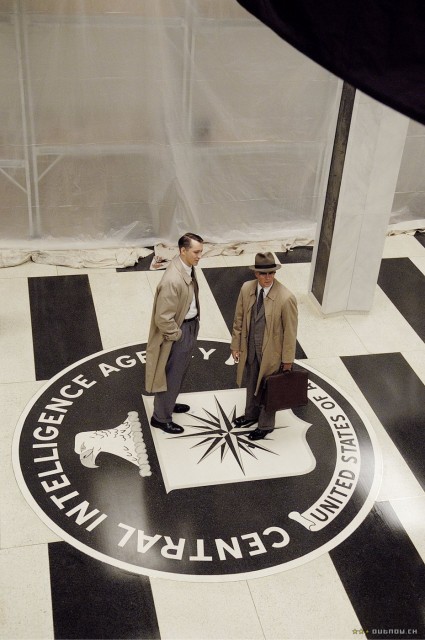
Starring Matt Damon and Angelina Jolie, “THE GOOD SHEPHERD” told the fictionalized story about the birth of the Central Intelligence Agency (C.I.A.) and counter-intelligence through the eyes of one man named Edward Wilson. Edward, the product of an East Coast aristocratic family and a C.I.A. official, has received an anonymous package during the spring of 1961. The famous C.I.A operation, the Bay of Pigs Invasion of Cuba had just failed. Inside the package is a reel-to-reel tape that reveals two unidentifiable people engaged in sex. Suspecting that the tape might reveal leads to the failure behind the Cuban operation, Edward has the tape investigated. The results lead to a possibility that the operation’s failure may have originated very close to home. During Edward’s investigation of the reel tape and the failure behind the Bay of Pigs, the movie reveals the history of his personal life and his career in both the C.I.A. and the Office of Strategic Services (O.S.S.) during World War II.

Many film critics and historians believe that the Edward Wilson character in “THE GOOD SHEPHERD” is loosely based upon the lives and careers of American intelligence officers, James Jesus Angelton and Richard M. Bissell, Jr.. And there might be some truth in this observation. But if I must be frank, I was never really concerned if the movie was a loose biography of anyone associated with the C.I.A. My concerns mainly focused on whether “THE GOOD SHEPHERD” is a good movie. Mind you, I had a few quibbles with it, but in the end I thought it was an above-average movie that gave moviegoers a peek into the operations of the C.I.A. and this country’s history between 1939 and 1961.

It is a pity that “THE GOOD SHEPHERD” was marred by a handful of prominent flaws. It really had the potential to be a well-made and memorable film. One of the problems I had were most of the characters’ emotional repression. Are we really supposed to believe that nearly every member of the upper-class in the country’s Northeast region are incapable of expressing overt emotion? I am not claiming that the performances were bad. Frankly, I was very impress by the performances featured in the movie. But the idea of nearly every major character – especially those born with a silver spoon – barely speaking above an audible whisper, due to his or her priviledged background, strikes me as more of a cliché than interesting and/or original characterization. I never understood what led Edward to finally realize that the man he believed was the genuine KGB defector Valentin Mironov, was actually a double agent. He should have realized this when the real Mironov had arrived several years earlier. The circumstances that led Edward to seek evidence inside one of the fake defector’s struck me as rather vague and far-reaching on screenwriter Eric Roth’s part. My main problem with “THE GOOD SHEPHERD” was its pacing. It was simply TOO DAMN SLOW. The movie has an interesting story, but De Niro’s snail-like pacing made it difficult for me to maintain my interest in one sitting. Thank goodness for DVDs. I feel that the only way to truly appreciate “THE GOOD SHEPHERD” without falling asleep is to watch a DVD copy in installments.

However, thanks to Eric Roth’s screenplay and Robert De Niro’s direction, “THE GOOD SHEPHERD” offered plenty of scenes and moments to enjoy. The moment of seduction at a Skull and Bones gathering that led Edward into a loveless marriage with Margaret ‘Clover’ Russell struck me as fascinating. It was a moment filled with passion and sex. Yet, the circumstances – namely Margaret’s pregnancy – forced Edward to give up a college love and marry a woman he did not truly love. I also enjoyed how De Niro and Roth used flashbacks to reveal the incidents in Edward’s post-college life and C.I.A. career, while he persisted into his investigation of the mysterious tape in the movie’s present day (1961). I was especially impressed by De Niro’s smooth ability to handle the transition from the present, to the past and back without missing a beat.

There were two scenes really stood out for me. One involved the Agency’s interrogation of the real Soviet defector, Valentin Mironov. I found it brutal, somewhat bloody and rather tragic in a perverse way. The other scene featured a loud and emotional quarrel between Edward and Margaret over the latter’s demand that Edward should convince his son not to join the C.I.A. What made this quarrel interesting is that after twenty years of a quiet and repressive marriage, the two finally revealed their true feelings for each other. But the best aspect of “THE GOOD SHEPHERD” was its depiction of how a decent, yet flawed allowed his work in intelligence and his position of power within the intelligence community warp his character. The higher Edward rose within the ranks of the C.I.A., the more he distanced himself from his family with his lies and secrets, and the more he was willing to corrupt himself in the name of national security . . . even to the extent of disrupting his son’s chance for happiness.

“THE GOOD SHEPHERD” must be one of the few large-scale movie productions, whose photography and production designs failed to give the impression of an epic. I found Robert Richardson’s photography rather limited, despite the numerous settings featured in the plot. So much of the movie’s scenes featured an interior setting. Yet, even most of the exterior scenes seemed to reflect a limited view. In the end, it was up to the movie’s 167 minute running time and 22 years time span that gave “THE GOOD SHEPHERD” an epic feel to it.

Robert De Niro and the casting team did a pretty good job in their selection of the cast. The only one I had a problem with was actor Lee Pace, who portrayed a fictionalized version of C.I.A. director Richard Helms named . . . Richard Hayes. I have always viewed Pace as an outstanding actor, but he spent most of his scenes smirking on the sidelines or making slightly insidious comments to the Edward Wilson character. I believe Roth’s screenplay had failed to give substance to his role. But there were plenty of other good supporting performances. I was especially impressed by Oleg Shtefanko’s subtle, yet insidious portryal of Edward’s KGB counterpart, Stas Siyanko aka Ulysses. Director Robert De Niro, John Sessions, Alec Baldwin, William Hurt, Billy Crudup, Joe Pesci and Tammy Blanchard all gave solid performances. Eddie Redmayne held his own with both Matt Damon and Angelina Jolie as the Wilsons’ intimidated and resentful son, Edward Wilson, Jr. Michael Gambon was his usual competent self as an MI-6 spymaster named Dr. Fredricks. Gambon was also lucky to give one of the best lines in the movie.

At least three performances impressed me. John Tuturro was very memorable as Edward’s tough and ruthless deputy, Ray Brocco. For once, De Niro’s insistence upon minimilist acting worked very well in Tuturro’s favor. The actor did an excellent job in portraying Brocco’s aggression with a very subtle performance, producing an interesting contrast in the character’s personality. I realize that Angelina Jolie had won her Oscar for “GIRL, INTERRUPTED”, a movie that had been released at least seven years before “THE GOOD SHEPHERD”. But I sincerely believe that her portryal of Edward’s long suffering wife, Margaret, was the first role in which she truly impressed me. She tossed away her usual habits and little tricks in order to give a very mature and subtle performance as a woman slowly sinking under the weight of a loveless and repressive marriage. And I believe that Jolie has not looked back, since. The task of carrying the 167-minute film fell upon the shoulders of Matt Damon and as usual, he was more than up to the job. And while there were times when his performance seemed a bit too subtle, I cannot deny that he did a superb job of developing the Edward Wilson character from a priviledge, yet inexperienced college student to a mature and emotionally repressed man who was willing to live with the negative aspects of his profession.

I do not believe that “THE GOOD SHEPHERD” will ever be considered as a great film. It has a small number of flaws, but those flaws were not as minor as they should have been – especially the slow pacing that threatened to put me to sleep. But I cannot deny it is damn good movie, thanks to Robert De Niro’s direction, Eric Roth’s screenplay and a talented cast led by Matt Damon. Fourteen years have passed since its release. It seems a pity that De Niro has not directed a movie since.


tumblr_m77ezegt5f1qf426so2_500

Sunday, October 4, 2020

"CLASS OF '61" (1993) Photo Gallery


Below are images from the 1993 television Civil War drama, "CLASS OF '61". Written by Jonas McCord and directed by Gregory Hoblit, the television movie starred Dan Futterman, Clive Owen and Sophie Ward:


"CLASS OF '61" (1993) Photo Gallery