Showing posts with label georgian age. Show all posts

Thursday, June 3, 2021

Scotch Egg


Below is an article about the British snack known as Scotch Egg


SCOTCH EGG

When I first learned about the dish known as Scotch Egg, I had assumed that it had originated in Scotland. Silly me. Basically a snack, the Scotch Egg is usually served at picnics or inside pubs. Today, the Scotch Egg can be found at supermarkets, corner shops and motorway service stations throughout Great Britain. Here in the United States, they can be found at British-style pubs and eateries. They are usually served with hot dipping sauces such as ranch dressing, hot sauce, or hot mustard sauce.

Many food historians claim that the exact origin of the Scotch Egg is unknown. Many believe that it might be a descendant of a form of the Mughlai dish called "nargisi kofta". However, the London Department store, Fortnum & Mason, claims it was inspired by the "nargisi kofta" and invented the Scotch Egg in 1738. 

The recipe for the Scotch Egg first appeared in the 1809 edition of Mrs. Rundell's 1806 cookbook, "A New System of Domestic Cookery". Mrs. Rundell and later 19th-century cookbook authors usually instructed their readers to served the Scotch Eggs hot and with gravy.

Below is a recipe from the Allrecipes.com website:


Scotch Egg

Ingredients

1 quart oil for frying 

4 eggs 

2 pounds pork sausage 

4 cups dried bread crumbs, seasoned 

1 cup all-purpose flour

4 eggs, beaten


Preparations

Preheat oven to 350 degrees F (175 degrees C). Heat oil in deep-fryer to 375 degrees F (190 degrees C).

Place eggs in saucepan and cover with water. Bring to boil. Cover, remove from heat, and let eggs sit in hot water for 10 to 12 minutes. Remove from hot water, cool and peel.

Flatten the sausage and make a patty to surround each egg. Very lightly flour the sausage and coat with beaten egg. Roll in bread crumbs to cover evenly.

Deep fry until golden brown, or pan fry while making sure each side is well cooked. Bake in the preheated oven for 10 minutes.

Cut in half and serve over a bed of lettuce and sliced tomatoes for garnish. If mustard is desired it looks beautiful over this.


Sunday, March 21, 2021

"SILAS MARNER" (1985) Review


"SILAS MARNER" (1985) Review

I have seen a handful of television and movie adaptations of novels written by George Eliot. But the very first adaptation I ever saw was "SILAS MARNER", the 1985 version of Eliot's third novel published back in 1861. My recent viewing of the production led me to reasses it.

"SILAS MARNER" begins with an English weaver living with a small Calvinist congregation in Lantern Yard, a slum street in a Northern England city. His life falls apart when he is framed for stealing the church's funds, while watching over the congregation's ill deacon. Worse, his fiancee leaves him for his so-called best friend, the very man who may have framed him. Shattered and embittered, Silas leaves Lantern Yard and arrives at a rural village in the Midlands called Raveloe. Although he resumes his trade as a weaver, Silas' traumatized past leads him to achieve a reputation as a miser and a loner in the community.

Silas' move to Raveloe eventually leads him to cross paths with the community's leading citizens, the Cass family. The head of the latter is the elderly Squire Cass who has two sons - Godfrey and Dunstan. Godfrey, who is the squire's heir is secretly married to one Molly Farren, a lower-class woman and opium addict from another town, who has given birth to his young daughter. Godfrey is also engaged to a young middle-class woman named Nancy Lammeter. Dunstan is a dissolute wastrel who constantly loses money via excessive gambling. One night, a drunken Dunstan breaks into Silas' cottage, steals the gold coins that the latter has been hoarding and disappears. Through a series of events, Molly plots to expose her marriage to Godfrey and their child during the Cass family's New Year party, but dies in the snow before she can reach it. Silas, who is emotionally upset over the loss of his coins, finds both the dead Molly and the child. Although he informs the partygoers of Molly's death and the child, he assumes guardianship of the latter (renamed Hephzibah "Eppie"), much to the relief of Godfrey, who can now legally marry Nancy. All goes well until Godfrey and Nancy's failure to have children threaten Silas' newfound happiness as Eppie's father years later.

What can I say about "SILAS MARNER"? I can honestly say that it was not one of the best adaptations of a George Eliot novel. Then again, I do not consider the 1861 novel to be one of her best works. I realized that Eliot had set the story either around the end of the 18th century or around the beginning of the 19th century. It was her prerogative. But both the novel and the movie seemed to reek of Victorian melodrama that I found myself feeling that Eliot or any adaptation could have set the story around the time it was originally written and published - the mid 19th century. The story is, at best, a good old-fashioned Victorian melodrama. I would never consider it as particularly original in compare to the likes of "MIDDLEMARCH" or "DANIEL DERONDA".

"SILAS MARNER" tries its best to be profound on the same level as the other two Eliot stories I had mentioned. But I had a few problems with the narrative. What was the point behind Dunstan Cass' disappearance and theft? Yes, he stole Silas' hard earned money before he disappeared. I got the feeling that the stolen coins seemed to serve as a prelude to Silas' emotional attachment to Eppie. But why have Dunstan take it? How else did his disappearance serve the story . . . even after his dead remains were found close by, years later? In Eliot's novel, the discovery of Dunstan led brother Godfrey to form a guilty conscience over his own secret regarding young Eppie and confess to his wife. But in the movie, it was Godfrey and Nancy's inability to conceive a child that seemed to finally force the former to confess. Unless my memories have played me wrong. Frankly, Dunstan struck me as a wasted character. Anyone else could have stolen Silas' money.

I also noticed that Giles Foster, who had served as both screenwriter and director for this production, left out a few things from Eliot's novel. I have never expect a movie or television to be an accurate adaptation of its literary source. But I wish Foster had shown how Eppie's presence in Silas' life had allowed him to socially connect with Raveloe's villagers. Eliot did this by allowing her to lead him outside, beyond the confines of his cottage. The only person with whom Silas managed to connect was neighbor Dolly Winthrop, who visited his cottage to deliver him food or give advice on how to raise Eppie. I also noticed that in the movie, Silas had never apologized to another villager named Jem Rodney for his false accusation of theft. And Jem had never demanded it. How odd. I also wish that Foster could have included the segment in which Silas had revisited his former neighborhood, Lantern Yard. In the novel, Silas' visit revealed how the neighborhood had transformed into a site for a factory and its citizens scattered to other parts. Silas' visit to his old neighborhood served as a reminder of how his life had improved in Raveloe and it is a pity that audiences never saw this on their television screens.

Yes, I have a few quibbles regarding "SILAS MARNER". But if I must be really honest, I still managed to enjoy it very much. Eliot had written a very emotional and poignant tale in which a lonely and embittered man finds a new lease on life through his connection with a child. Thanks to George Eliot's pen and Giles Foster's typewriter, this story was perfectly set up by showing how Silas Marner's life fell into a social and emotional nadir, thanks to the betrayal of a "friend" and the easily manipulated emotions of his neighbors.

Once Silas moved to Raveloe, the television movie did an excellent, if not perfect, job of conveying how he re-connected with the world. It was simply not a case of Silas stumbling across a foundling and taking her in. Even though he had formed a minor friendship with Mrs. Winthrop, having Eppie in his life managed to strengthen their friendship considerably. The movie's narrative also took its time in utilizing how the Cass family dynamics played such an important role in Silas' life in Raveloe. After all, Godfrey' secret marriage to Molly Farren brought Eppie into his life. And Dunstan's theft of his funds led Silas to re-direct his attention from his missing coins to the lost Eppie. And both Godfrey and Nancy Cass proved to be a threat to Silas and Eppie's future relationship.

The production values for "SILAS MARNER" proved to be solid. But if I must be honest, I did not find any of it - the cinematography, production designs and costume designs - particularly memorable. The performances in the movie was another matter. "SILAS MARNER" featured solid performances from the likes of Rosemary Martin, Jim Broadbent (before he became famous), Nick Brimble, Frederick Treves, Donald Eccles, Rosemary Greenwood; and even Elizabeth Hoyle and Melinda White who were both charming as younger versions of Eppie Marner.

Angela Pleasence certainly gave a memorable performance as Eppie's drug addicted mother, Molly Farren. Patsy Kensit not only gave a charming performance as the adolescent Eppie, I thought she was excellent in one particular scene in which Eppie emotionally found herself torn between Silas and the Casses. Freddie Jones gave his usual competent performance as the emotional Squire Cass, father of both Godfrey and Dunstan. I was especially impressed by Jonathan Coy's portrayal of the dissolute Dunstan Cass. In fact, I was so impressed that it seemed a pity that his character was only seen in the movie's first half.

I initially found the portrayal of Nancy Lammeter Cass rather limited, thanks to Eliot's novel and Foster's screenplay. Fortunately, Nancy became more of a central character in the film's second half and Jenny Agutter did a skillful job in conveying Nancy's growing despair of her inability to have children and her desperation to adopt Eppie. I thought Patrick Ryecart gave one of the two best performances in "SILAS MARNER". He did an excellent job of conveying Godfrey Cass' moral ambiguity - his secrecy over his marriage to Molly Farren, the passive-aggressive manner in which he "took care" of Eppie through Silas and his willingness to use Eppie as a substitute for his and Nancy's failure to have children. Ryecart made it clear that Godfrey was basically a decent man . . . decent, but flawed. The other best performance in "SILAS MARNER" came from leading man Ben Kingsley, who portrayed the title character. Kingsley did a superb job of conveying Silas' emotional journey. And it was quite a journey - from the self-satisfied weaver who found himself shunned from one community, to the embittered man who stayed away from his new neighbors, to a man experiencing the joys and fears of fatherhood for the first time, and finally the loving man who had finally learned to re-connect with others.

Overall, "SILAS MARNER" is more than a solid adaptation of George Eliot's novel. I did not find its production designs particularly overwhelming. I did enjoy Eliot's narrative, along with Giles Foster's adaptation rather enjoyable . . . if not perfect. But I cannot deny that what really made this movie work for me were the first-rate performances from a cast led by the always talented Ben Kingsley. Victorian melodrama or not, I can honestly say that I have yet to grow weary of "SILAS MARNER".

Friday, December 4, 2020

"SILAS MARNER" (1985) Photo Gallery


Below are images from "SILAS MARNER", the 1985 television adaptation of George Eliot's 1865 novel, "Silas Marner: The Weaver of Raveloe". Directed by Giles Foster, the movie starred Ben Kingsley in the title role:


"SILAS MARNER" (1985) Photo Gallery


Thursday, March 5, 2020

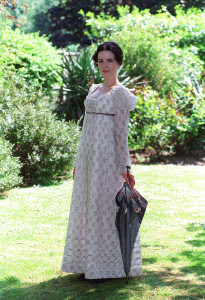
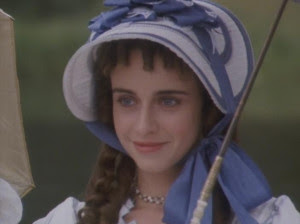
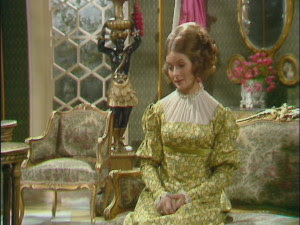
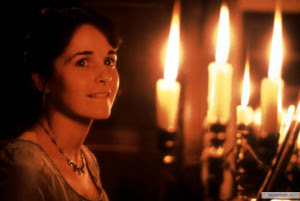
JANE AUSTEN's Heroine Gallery

janeaustenHEROINES

Below is a look at the fictional heroines created by Jane Austen in the six published novels written by her. So, without further ado . . .


JANE AUSTEN'S HEROINE GALLERY

Elinor 4 Elinor 3 Elinor 2 Elinor 1

Elinor Dashwood - "Sense and Sensibility" (1811)

Elinor Dashwood is the oldest Dashwood sister who symbolizes a coolness of judgement and strength of understanding. This leads her to be her mother's frequent counsellor, and sometimes shows more common sense than the rest of her family. Elinor could have easily been regarded as a flawless character, if it were not for her penchant of suppressing her emotions just a little too much. Ironically, none of the actresses I have seen portray Elinor were never able to portray a nineteen year-old woman accurately.

Elinor - Joanna David

1. Joanna David (1971) - She gave an excellent performance and was among the few who did not indulge in histronics. My only complaint was her slight inability to project Elinor's passionate nature behind the sensible facade.


Elinor - Irene Richards

2. Irene Richards (1981) - I found her portrayal of Elinor to be solid and competent. But like David, she failed to expose Elinor's passionate nature behind the stoic behavior.


Elinor - Emma Thompson

3. Emma Thompson (1995) - Many have complained that she was too old to portray Elinor. Since the other actresses failed to convincingly portray a nineteen year-old woman, no matter how sensible, I find the complaints against Thompson irrelevant. Thankfully, Thompson did not bother to portray Elinor as a 19 year-old. And she managed to perfectly convey Elinor's complexities behind the sensible facade.


Elinor - Hattie Morahan

4. Hattie Morahan (2008) - She gave an excellent performance and was able to convey Elinor's passionate nature without any histronics. My only complaint was her tendency to express Elinor's surprise with this deer-in-the-headlights look on her face.


Marianne 4 Marianne 3 Marianne 2 Marianne 1

Marianne Dashwood - "Sense and Sensibility" (1811)

This second Dashwood sister is a different kettle of fish from the first. Unlike Elinor, Marianne is an emotional adolescent who worships the idea of romance and excessive sentimentality. She can also be somewhat self-absorbed, yet at the same time, very loyal to her family.

Marianne - Ciaran Madden

1. Ciaran Madden - Either Madden had a bad director or the actress simply lacked the skills to portray the emotional and complex Marianne. Because she gave a very hammy performance.


Marianne - Tracey Childs

2. Tracey Childs - She was quite good as Marianne, but there were times when she portrayed Marianne as a little too sober and sensible - even early in the story.


Marianne - Kate Winslet

3. Kate Winslet (1995) - The actress was in my personal opinion, the best Marianne Dashwood I have ever seen. She conveyed Marianne's complex and emotional nature with great skill, leading her to deservedly earn an Oscar nomination.


Marianne - Charity Wakefield

4. Charity Wakefield (2008) - She solidly portrayed the emotional Marianne, but there were moments when her performance seemed a bit mechanical.


Elizabeth 4 Elizabeth 3 Elizabeth 2 Elizabeth 1

Elizabeth Bennet - "Pride and Prejudice" (1813)

Elizabeth is the second of five daughters of an English gentleman and member of the landed gentry. She is probably the wittiest and most beloved of Austen's heroines. Due to her father's financial circumstances - despite being a landowner - Elizabeth is required to seek a marriage of convenience for economic security, despite her desire to marry for love.


Elizabeth - Greer Garson

1. Greer Garson (1940) - Her performance as Elizabeth Bennet has been greatly maligned in recent years, due to the discovery that she was in her mid-30s when she portrayed the role. Personally, I could not care less about her age. She was still marvelous as Elizabeth, capturing both the character's wit and flaws perfectly.


Elizabeth - Elizabeth Garvie

2. Elizabeth Garvie (1980) - More than any other actress, Garvie portrayed Elizabeth with a soft-spoken gentility. Yet, she still managed to infuse a good deal of the character's wit and steel with great skill.


Elizabeth - Jennifer Ehle

3. Jennifer Ehle (1995) - Ehle is probably the most popular actress to portray Elizabeth and I can see why. She was perfect as the witty, yet prejudiced Elizabeth. And she deservedly won a BAFTA award for her performance.


Elizabeth - Keira Knightley

4. Keira Knightley (2005) - The actress is not very popular with the public these days. Which is why many tend to be critical of her take on Elizabeth Bennet. Personally, I found it unique in that hers was the only Elizabeth in which the audience was given more than a glimpse of the effects of the Bennet family's antics upon her psyche. I was more than impressed with Knightley's performance and thought she truly deserved her Oscar nomination.


Jane 4 Jane 3 Jane 2 Jane 1

Jane Bennet - "Pride and Prejudice" (1813)

The oldest of the Bennet daughters is more beautiful, but just as sensible as her younger sister, Elizabeth. However, she has a sweet and shy nature and tends to make an effort to see the best in everyone. Her fate of a happily ever after proved to be almost as important as Elizabeth's.


Jane - Maureen O Sullivan

1. Maureen O'Sullivan (1940) - She was very charming as Jane Bennet. However, her Jane seemed to lack the sense that Austen's literary character possessed.


Jane - Sabina Franklin

2. Sabina Franklyn (1980) - She gave a solid performance as the sweet-tempered Jane. However, her take on the role made the character a little more livelier than Austen's original character.


Jane - Susannah Harker

3. Susannah Harker (1995) - I really enjoyed Harker's take on the Jane Bennet role. She did a great job in balancing Jane's sweet temper, inclination to find the best in everyone and good sense that Elizabeth ignored many times.


Jane - Rosamund Pike

4. Rosamund Pike (2005) - She gave a pretty good performance as the sweet and charming Jane, but rarely got the chance to act as the sensible older sister, due to director Joe Wright's screenplay.


Fanny 3 Fanny 2 Fanny 1

Fanny Price - "Mansfield Park" (1814)

Unfortunately, Fanny happens to be my least favorite Jane Austen heroine. While I might find some of her moral compass admirable and resistance to familial pressure to marry someone she did not love, I did not admire her hypocrisy and passive aggressive behavior. It is a pity that she acquired what she wanted in the end - namely her cousin Edmund Bertram as a spouse - without confronting his or her own personality flaws.

Fanny - Sylvestra de Tourzel

1. Sylvestra de Tourzel (1983) - She had some good moments in her performance as Fanny Price. Unfortunately, there were other moments when I found her portrayal stiff and emotionally unconvincing. Thankfully, de Tourzel became a much better actress over the years.


Fanny - Frances O Connor

2. Frances O'Connor (1999) - The actress portrayed Fanny as a literary version of author Jane Austen - witty and literary minded. She skillfully infused a great deal of wit and charm into the character, yet at the same time, managed to maintain Fanny's innocence and hypocrisy.


Fanny - Billie Piper

3. Billie Piper (2007) - Many Austen fans disliked her portrayal of Fanny. I did not mind her performance at all. She made Fanny a good deal more bearable to me. Piper's Fanny lacked de Tourzel's mechanical acting and O'Connor's portrayal of Fanny as Jane Austen 2.0. More importantly, she did not portray Fanny as a hypocrite, as the other two did.


Emma 4 Emma 3 Emma 2 Emma 1

Emma Woodhouse - "Emma" (1815)

When Jane Austen first created the Emma Woodhouse character, she described the latter as "a heroine whom no-one but myself will much like". And while there might be a good deal to dislike about Emma - her snobbery, selfishness and occasional lack of consideration for others - I cannot deny that she still remains one of the most likeable Austen heroines for me. In fact, she might be my favorite. She is very flawed, yet very approachable.


Emma - Doran Godwin

1. Doran Godwin (1972) - She came off as a bit haughty in the first half of the 1972 miniseries. But halfway into the production, she became warmer and funnier. Godwin also had strong chemistry with her co-stars John Carson and Debbie Bowen.


Emma - Gwyneth Paltrow

2. Gwyneth Paltrow (1996) - Paltrow's portryal of Emma has to be the funniest I have ever seen. She was fantastic. Paltrow captured all of Emma's caprices and positive traits with superb comic timing.


Emma - Kate Beckinsale

3. Kate Beckinsale (1996-97) - She did a very good job in capturing Emma's snobbery and controlling manner. But . . . her Emma never struck me as particularly funny. I think Beckinsale developed good comic timing within a few years after this movie.


Emma - Romola Garai

4. Romola Garai (2009) - Garai was another whose great comic timing was perfect for the role of Emma. My only complaint was her tendency to mug when expressing Emma's surprise.


Catherine 2 Catherine 1

Catherine Morland - "Northanger Abbey" (1817)

I have something in common with the Catherine Morland character . . . we are both bookworms. However, Catherine is addicted to Gothic novel and has an imagination that nearly got the best of her. But she is also a charmer who proved to be capable of growth.


Catherine - Katharine Schlesinger

1. Katharine Schlesinger (1986) - I cannot deny that I disliked the 1986 version of Austen's 1817 novel. However, I was impressed by Schlesinger's spot on portrayal of the innocent and suggestive Katherine.


Catherine - Felicity Jones

2. Felicity Jones (2007) - She did a superb job in not only capturing Catherine's personality, she also gave the character a touch of humor in her scenes with actor J.J. Feild that I really appreciated.


Anne 3 Anne 2 Anne 1

Anne Elliot - "Persuasion" (1818)


Anne - Ann Firbank

1. Ann Firbank (1971) - Although I had issues with her early 70s beehive and constant use of a pensive expression, I must admit that I rather enjoyed her portrayal of the regretful Anne. And unlike many others, her age - late 30s - did not bother me one bit.


Anne - Amanda Root

2. Amanda Root (1995) - Root's performance probably created the most nervous Anne Elliot I have ever seen on screen. However, she still gave a superb performance.


Anne - Sally Hawkins

3. Sally Hawkins (2007) - She was excellent as the soft-spoken Anne. More importantly, she did a wonderful job in expressing Anne's emotions through her eyes.