"EMMA" (1996) Review
There are times that I find it hard to believe I have seen at least four adaptation of Jane Austen's 1815 novel, "Emma", in the past year-and-a-half. Four adaptations. There have been a good deal more than four adaptations. But I have yet to watch any of them. The last adaptation I watched turned out to be writer/director Douglas McGrath's 1996 film, which starred Gwyneth Paltrow.
Although the actress had been working for a few years, it was her performance as Emma Woodhouse that put her on the map to stardom. In fact, I would say that "EMMA" also proved to be a professional milestone for co-stars Jeremy Northam and Toni Collette. "EMMA" turned out to be the second movie that featured both Paltrow and Collette as co-stars. And the movie also proved to be the directorial debut of Douglas McGrath. Was the movie worth the importance in the careers of the four mentioned? Perhaps.
I would never claim that "EMMA" was the best adaptation of Austen's 1815 novel. There were aspects of it that I found unappealing or troubling. McGrath's use of the Jane Fairfax character struck me as rather minimal. In fact, poor Polly Walker was barely able to speak more than five or six lines during her entire appearance in the movie. I got the feeling that the director/writer was not particularly interested in the character. And his limited use of poor Jane made me wonder why Emma would harbor any jealousy toward her in the first place. The characters of Isabella and John Knightley were barely used as well. I found this disappointing, since both have proved to be very interesting in other adaptations - especially the slightly rude John Knightley. Another problem I had with "EMMA" proved to be Ewan McGregor's portrayal of Frank Churchill. I do not know if the problem was the actor or McGrath's writing. But the portrayal of the character seemed . . . off. Frank seemed more busy trying to hide his feelings for Jane, instead of forming any kind of connection to Emma. In other words, this movie did not do justice to the characters of Frank Churchill, Jane Fairfax, and the John Knightleys.
But despite these flaws, I must admit that "EMMA" turned out to be a very entertaining and first-rate movie. Personally, I believe that the movie's top-notch owned a great deal to McGrath's direction. The director shot "EMMA" with a steady pace that allowed the audience to enjoy the greater details of Austen's tale. This is really a well paced movie, despite the few nips and tuck McGrath inflicted into the story. "EMMA" could never bore me with a slow pacing. Yet, at the same time, it did not race by with the speed of a comet. Another aspect that contributed greatly to "EMMA" proved to be its comic timing. I honestly have to say that the 1996 film might be the funniest adaptation of Austen's novel. This was especially apparent in two particular scenes - the Westons' Christmas party, Emma and Mr. Knightley's conversation about Harriet Smith and Robert Martin, and a specific moment during the Coles' supper party that I cannot really explain with words.
There were changes to Austen's novel that many have protested against, but did not bother me one whit. Some have pointed out that Sophie Thompson had been too young in 1995-96 to portray the middle-aged Miss Bates. She was in her early 30s at the time. Even McGrath had initially rejected her for the role when she first auditioned. But once Thompson donned a pair of glasses that made her seem several years older. And the age range for middle-age is pretty uncertain - even to this day. One range stretches from the mid-30s to the mid-60s, in which Miss Bates would fit. Besides . . . Thompson's portrayal of the chatty Miss Bates is so deliciously funny that in the end, I am glad that McGrath had cast her in the role. Other changes include both Harriet Smith and Emma being rescued from the gypsies by Frank Churchill, the location of Emma's first meeting with Frank, and the convergence of both the strawberry picking and the Box Hill picnic into one outing.
Two of the bigger changes proved to be Harriet's reaction to Emma's engagement to Mr. Knightley and the circumstances that surrounded Emma's insult to Miss Bates. I found these last two changes somewhat of an improvement to Austen's story. I have always thought that Austen had glossed over Harriet's reaction to Emma and Mr. Knightley's engagement. After allowing Harriet to develop a crush over Donwell Abbey's master, Austen went out of her way to avoid or evade how Harriet might have reacted to the news. McGrath, on the other hand, approached the matter with a little more realism by allowing Harriet to react with tears. The other change featured Emma's insult to Miss Bates on Box Hill. In the novel and other versions, Emma's insult regarding Miss Bates' intelligence had been laced with humor. Emma's insult was tinged with malice in this version, due to her anger over the Eltons' cold reaction to Frank's regard for her. And instead of Jane Fairfax refusing to see Emma during the latter's visit to the Bates' home following the picnic, it was Miss Bates who refused to see her. Now many "purists" might have a problem with these changes. I did not. As far as I am concerned, these changes did not harm the story.
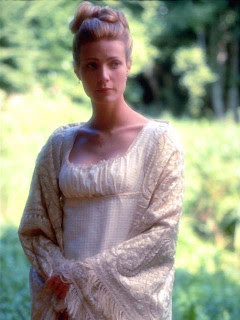
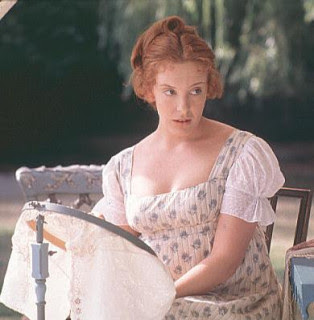
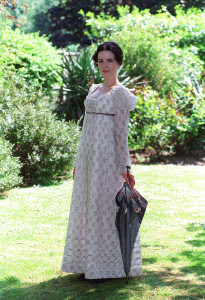
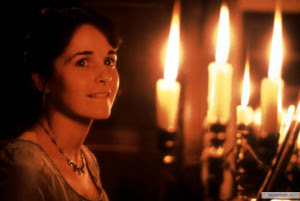
I can say this about "EMMA" . . . it proved to be one of the most beautiful looking Austen adaptations I have ever seen. I am not familiar with Ian Wilson's work, other than his photography for the 1981 miniseries, "THE FLAME TREES OF THIKA". And I have not laid eyes on that particular production in many years. I only hope that it looks as beautiful and lush as Wilson's photography in "EMMA". My God, I never thought that such lush and sharp colors could look so elegant. The look and style of Wilson's photography seemed to match Ruth Meyer's costume designs. The light elegance and pastel coloring featured in Meyer's costumes almost gave them an ethereal vision - especially those costumes for the female cast. Meyer had received criticism from those who claimed that her costumes did not accurately reflect the Regency decade or English fashion. I was too busy enjoying Meyer's costume designs to really care.
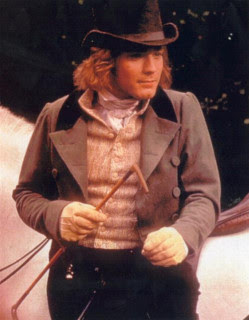
"EMMA" provided some first-rate performances from the cast. Well . . . let me rephrase that statement. From most of the cast. Poor Ewan McGregor was nearly defeated by McGrath's written portrayal of Frank Churchill and that damn wig he was forced to wear. The London Film Critics' Circle gave him the British Actor of the Year award. I am sorry, but I do believe he did not deserve this award. And he would be the first to agree with me, considering his past criticism of his performance. And poor Polly Walker was damn near wasted in her role as Jane Fairfax, due to McGrath's failure to give her any depth. And lines. There were times I felt that McGrath was more interested in Emma's reaction to Jane's "perfections" than in the character. But the rest of the cast fared just fine. Both Greta Scacchi and James Cosmo gave solid performances as Mrs. and Mr. Weston (Emma's former governess and Frank's father). I could say the same for Phyllida Law's silent portrayal of the defeated Mrs. Bates. Denys Hawthorne gave a charmingly humorous portrayal of Emma's father, Mr. Woodhouse. But I did not find his performance as memorable as some of the other actors who have portrayed the character. But there were performances that really knocked the wind out of me. Juliet Stevenson was hilarious as the verbose and vulgar Mrs. Augusta Elton. She was so perfect (and annoying) in the role that I found myself wishing someone would bash her over the head to stop her prattling. However, I could stand and listen to Sophie Thompson's prattling all day. I really enjoyed her portrayal as the equally verbose and pitiful verbose Miss Bates. I especially enjoyed her habit of loudly repeating a word or line in order for her silent mother to hear. Alan Cummings struck me as deliciously insidious as the fortune seeking Reverend Philip Elton. What I found amazing about his performance was his transformation from the slimy courtier to Mrs. Elton's henpecked and dominated husband.
The three performances that really caught my attention came from Gwyneth Paltrow, Jeremy Northam and Toni Collette. The latter gave one of the best comic performances I have ever seen in an Austen production. Her portrayal of the easily manipulated Harriet Smith reminded me of Debbie Bowen's portrayal in the 1972 miniseries. But I believe Collette injected more comic skill into the role. Although Jeremy Northam was slightly younger than the literary George Knightley, he easily conveyed the character's dignity and wisdom . . . and at the same time injected a great deal of wit and excellent comic timing into his performance. One of my favorite Northam moments turned out to be Knightley's silent reaction to Emma's duet with Frank Churchill at the Coles' party. Northam's Mr. Knightley looked as if he had found a worm in his salad and his expression had me shaking with laughter. Gwyneth Paltrow's portrayal of the well-meaning, yet snobbish Emma Woodhouse projected her into stardom. And I can see why. She not only gave one of the best performances in her early career, but I also believe that she proved to be the funniest Emma I have yet to see in any adaptation. Yet, at the same time, Paltrow did a great job in conveying Emma's more dramatic moments and character development.
Although I do not consider "EMMA" to be the best adaptation of Jane Austen's 1815 novel, I have to admit that Douglas McGrath both wrote and directed an excellent film. He was ably supported by Ian Wilson's beautiful photography, Ruth Meyer's gorgeous costumes and a first-rate cast led by the excellent Gwyneth Paltrow. McGrath's body of work may not have been that perfect, but I believe he can look back on his work for "EMMA" with great pride.
There are times that I find it hard to believe I have seen at least four adaptation of Jane Austen's 1815 novel, "Emma", in the past year-and-a-half. Four adaptations. There have been a good deal more than four adaptations. But I have yet to watch any of them. The last adaptation I watched turned out to be writer/director Douglas McGrath's 1996 film, which starred Gwyneth Paltrow.
Although the actress had been working for a few years, it was her performance as Emma Woodhouse that put her on the map to stardom. In fact, I would say that "EMMA" also proved to be a professional milestone for co-stars Jeremy Northam and Toni Collette. "EMMA" turned out to be the second movie that featured both Paltrow and Collette as co-stars. And the movie also proved to be the directorial debut of Douglas McGrath. Was the movie worth the importance in the careers of the four mentioned? Perhaps.
I would never claim that "EMMA" was the best adaptation of Austen's 1815 novel. There were aspects of it that I found unappealing or troubling. McGrath's use of the Jane Fairfax character struck me as rather minimal. In fact, poor Polly Walker was barely able to speak more than five or six lines during her entire appearance in the movie. I got the feeling that the director/writer was not particularly interested in the character. And his limited use of poor Jane made me wonder why Emma would harbor any jealousy toward her in the first place. The characters of Isabella and John Knightley were barely used as well. I found this disappointing, since both have proved to be very interesting in other adaptations - especially the slightly rude John Knightley. Another problem I had with "EMMA" proved to be Ewan McGregor's portrayal of Frank Churchill. I do not know if the problem was the actor or McGrath's writing. But the portrayal of the character seemed . . . off. Frank seemed more busy trying to hide his feelings for Jane, instead of forming any kind of connection to Emma. In other words, this movie did not do justice to the characters of Frank Churchill, Jane Fairfax, and the John Knightleys.
But despite these flaws, I must admit that "EMMA" turned out to be a very entertaining and first-rate movie. Personally, I believe that the movie's top-notch owned a great deal to McGrath's direction. The director shot "EMMA" with a steady pace that allowed the audience to enjoy the greater details of Austen's tale. This is really a well paced movie, despite the few nips and tuck McGrath inflicted into the story. "EMMA" could never bore me with a slow pacing. Yet, at the same time, it did not race by with the speed of a comet. Another aspect that contributed greatly to "EMMA" proved to be its comic timing. I honestly have to say that the 1996 film might be the funniest adaptation of Austen's novel. This was especially apparent in two particular scenes - the Westons' Christmas party, Emma and Mr. Knightley's conversation about Harriet Smith and Robert Martin, and a specific moment during the Coles' supper party that I cannot really explain with words.
There were changes to Austen's novel that many have protested against, but did not bother me one whit. Some have pointed out that Sophie Thompson had been too young in 1995-96 to portray the middle-aged Miss Bates. She was in her early 30s at the time. Even McGrath had initially rejected her for the role when she first auditioned. But once Thompson donned a pair of glasses that made her seem several years older. And the age range for middle-age is pretty uncertain - even to this day. One range stretches from the mid-30s to the mid-60s, in which Miss Bates would fit. Besides . . . Thompson's portrayal of the chatty Miss Bates is so deliciously funny that in the end, I am glad that McGrath had cast her in the role. Other changes include both Harriet Smith and Emma being rescued from the gypsies by Frank Churchill, the location of Emma's first meeting with Frank, and the convergence of both the strawberry picking and the Box Hill picnic into one outing.
Two of the bigger changes proved to be Harriet's reaction to Emma's engagement to Mr. Knightley and the circumstances that surrounded Emma's insult to Miss Bates. I found these last two changes somewhat of an improvement to Austen's story. I have always thought that Austen had glossed over Harriet's reaction to Emma and Mr. Knightley's engagement. After allowing Harriet to develop a crush over Donwell Abbey's master, Austen went out of her way to avoid or evade how Harriet might have reacted to the news. McGrath, on the other hand, approached the matter with a little more realism by allowing Harriet to react with tears. The other change featured Emma's insult to Miss Bates on Box Hill. In the novel and other versions, Emma's insult regarding Miss Bates' intelligence had been laced with humor. Emma's insult was tinged with malice in this version, due to her anger over the Eltons' cold reaction to Frank's regard for her. And instead of Jane Fairfax refusing to see Emma during the latter's visit to the Bates' home following the picnic, it was Miss Bates who refused to see her. Now many "purists" might have a problem with these changes. I did not. As far as I am concerned, these changes did not harm the story.
I can say this about "EMMA" . . . it proved to be one of the most beautiful looking Austen adaptations I have ever seen. I am not familiar with Ian Wilson's work, other than his photography for the 1981 miniseries, "THE FLAME TREES OF THIKA". And I have not laid eyes on that particular production in many years. I only hope that it looks as beautiful and lush as Wilson's photography in "EMMA". My God, I never thought that such lush and sharp colors could look so elegant. The look and style of Wilson's photography seemed to match Ruth Meyer's costume designs. The light elegance and pastel coloring featured in Meyer's costumes almost gave them an ethereal vision - especially those costumes for the female cast. Meyer had received criticism from those who claimed that her costumes did not accurately reflect the Regency decade or English fashion. I was too busy enjoying Meyer's costume designs to really care.
"EMMA" provided some first-rate performances from the cast. Well . . . let me rephrase that statement. From most of the cast. Poor Ewan McGregor was nearly defeated by McGrath's written portrayal of Frank Churchill and that damn wig he was forced to wear. The London Film Critics' Circle gave him the British Actor of the Year award. I am sorry, but I do believe he did not deserve this award. And he would be the first to agree with me, considering his past criticism of his performance. And poor Polly Walker was damn near wasted in her role as Jane Fairfax, due to McGrath's failure to give her any depth. And lines. There were times I felt that McGrath was more interested in Emma's reaction to Jane's "perfections" than in the character. But the rest of the cast fared just fine. Both Greta Scacchi and James Cosmo gave solid performances as Mrs. and Mr. Weston (Emma's former governess and Frank's father). I could say the same for Phyllida Law's silent portrayal of the defeated Mrs. Bates. Denys Hawthorne gave a charmingly humorous portrayal of Emma's father, Mr. Woodhouse. But I did not find his performance as memorable as some of the other actors who have portrayed the character. But there were performances that really knocked the wind out of me. Juliet Stevenson was hilarious as the verbose and vulgar Mrs. Augusta Elton. She was so perfect (and annoying) in the role that I found myself wishing someone would bash her over the head to stop her prattling. However, I could stand and listen to Sophie Thompson's prattling all day. I really enjoyed her portrayal as the equally verbose and pitiful verbose Miss Bates. I especially enjoyed her habit of loudly repeating a word or line in order for her silent mother to hear. Alan Cummings struck me as deliciously insidious as the fortune seeking Reverend Philip Elton. What I found amazing about his performance was his transformation from the slimy courtier to Mrs. Elton's henpecked and dominated husband.
The three performances that really caught my attention came from Gwyneth Paltrow, Jeremy Northam and Toni Collette. The latter gave one of the best comic performances I have ever seen in an Austen production. Her portrayal of the easily manipulated Harriet Smith reminded me of Debbie Bowen's portrayal in the 1972 miniseries. But I believe Collette injected more comic skill into the role. Although Jeremy Northam was slightly younger than the literary George Knightley, he easily conveyed the character's dignity and wisdom . . . and at the same time injected a great deal of wit and excellent comic timing into his performance. One of my favorite Northam moments turned out to be Knightley's silent reaction to Emma's duet with Frank Churchill at the Coles' party. Northam's Mr. Knightley looked as if he had found a worm in his salad and his expression had me shaking with laughter. Gwyneth Paltrow's portrayal of the well-meaning, yet snobbish Emma Woodhouse projected her into stardom. And I can see why. She not only gave one of the best performances in her early career, but I also believe that she proved to be the funniest Emma I have yet to see in any adaptation. Yet, at the same time, Paltrow did a great job in conveying Emma's more dramatic moments and character development.
Although I do not consider "EMMA" to be the best adaptation of Jane Austen's 1815 novel, I have to admit that Douglas McGrath both wrote and directed an excellent film. He was ably supported by Ian Wilson's beautiful photography, Ruth Meyer's gorgeous costumes and a first-rate cast led by the excellent Gwyneth Paltrow. McGrath's body of work may not have been that perfect, but I believe he can look back on his work for "EMMA" with great pride.