Showing posts with label hugh bonneville. Show all posts

Thursday, October 21, 2021

"DOWNTON ABBEY" – Series Three (2012) Retrospective


"DOWNTON ABBEY" – Series Three (2012) Retrospective

It had taken me a while to get around watching Series Three of "DOWNTON ABBEY" when it first aired. I had been inclined to watch it, while it aired on PBS last winter. But in the end, I decided to wait until the DVD release was offered through Netflix.

I suspect that some of my reluctance to watch the show's Series Three could be traced to my major disappointment over the lackluster Series Two. In fact, a part of me was amazed that the series' shoddy look at World War I could end up with an Emmy nomination for Best Drama. But I figured that series creator, Julian Fellowes, would make up for the Emmy-nominated disaster known as Series Two with an improved third season. In the end, Series Three proved to be an improvement. Somewhat.

What did I like about Series Three of "DOWNTON ABBEY"? It possessed three plot lines that I found a good deal to admire:

1) The estate's financial crisis
2) Valet Thomas Barrow's infatuation with new footman Jimmy Kent
3) Lady Sybil Branson's death


Downton Abbey's financial crisis, kick-started by Robert, the Earl of Grantham's disastrous investment into Canada's Grand Trunk Railway, which truly emphasized the peer's inability to handle money and his estate. In fact, this story line also exposed Lord Grantham's other flaws - stubborness and inability to move with the times - in full force. Actually, the third story line involving the death of his youngest daughter, Lady Sybil Branson - of childbirth, did not paint a pretty picture of the peer, considering that his decision to ignore Dr. Clarkson's medical advice led to Lady Sybil's tragic death, following the birth of his oldest grandchild. The plot regarding Thomas Barrow's feelings for Jimmy Kent allowed Fellowes to explore the status of homosexuals during early 20th century Britain. The plot surrounding Lady Sybil's death in Episode Five not only proved to be heartbreaking, but also featured fine performances from the departing Jessica Findlay-Brown as the doomed Lady Sybil; Allen Leech as Sybil's husband Tom Branson; David Robb as the desperate Dr. Clarkson; Rob James-Collier as a grieving Thomas Barrow; Hugh Bonneville as the Earl of Grantham; a guest appearance by Tim Pigott-Smith as the society doctor recruited by Lord Grantham to treat Lady Sybil; and especially Elizabeth McGovern, who I believe gave the best performance as Lady Sybil's grieving mother, the American-born Countess of Grantham.

But even these first-rate story lines were marred by some questionable writing. Lord Grantham's bad investment and financial loss had the family flailing for a bit, until salvation appeared in the form of a possible inheritance for the peer's heir presumptive, son-in-law Matthew Crawley. The latter learned that Reginald Swire, the recently dead father of his late fiancée had named him as an heir to his vast fortune. Matthew felt reluctant to accept money from Lavinia Swire's money, considering what happened before her death in Series Two. Most fans expressed frustration at Matthew's reluctance to accept the money and save Downton Abbey. I felt nothing but contempt toward Fellowes for utilizing this ludicrous plot point to save the estate from financial ruin. I found it absolutely tasteless that Matthew would inherit money from the father of the fiancée who witnessed him kissing his future wife Lady Mary Crawley, before succumbing of the Spanish Flu. This was just tackiness beyond belief.

And I wish Fellowes had found another way for Lord Grantham or Matthew to acquire the cash needed to save the estate. Lady Sybil's death and Lord Grantham's participation in it led to a serious marital estrangement between the peer and his wife, who angrily blamed him for ignoring Dr. Clarkson's medical advice. Lady Grantham's anger lasted through most of Episode Six, until the Dowager Lady Grantham convinced the good doctor to lie to her son and daughter-in-law that his medical advice may not have saved Lady Sybil in the end, ending Lady Grantham's anger and the marital strife between the pair. I suspect the majority of the series' fans were relieved that Lord and Lady Grantham's marriage had been saved before it could get any worse. I was not. I saw this as Fellowes' reluctance or inability to fully explore the negative consequences of Sybil's death. Even worse, I saw this as artistic cowardice on Fellowes' part. A martial conflict between Robert and Cora could have spelled a dramatic gold mine.

Even the Thomas Barrow-Jimmy Kent storyline was marred by aspects that led me to shake my head in disbelief. The entire matter began with a minor feud between former friends Thomas and lady's maid Sarah O'Brien over the former's unwillingness to help the latter's nephew, Alfred Nugent, with his duties. One, why would Thomas refuse to help the nephew of his only friend on the estate? And two, this little incident led O'Brien to escalate the feud, leading her to set up a scheme that would expose Thomas' homosexuality? It seemed to come out of no where. This story line ended with more head scratching for me. First, Fellowes had Thomas sneaking into Jimmy's bedroom for some petting and caresses, making for the former look like a sexual molester. One would think after his experiences with the Duke of Crowborough and Mr. Pamuk would have led him to be more careful. And following his exposure, Thomas faced losing his job and being arrested and convicted for his sexual preference. And while he faced personal censure from Mr. Carson, Alfred and the object of his desire, Jimmy Kent; most of Downton Abbey's inhabitants seemed unusually tolerate of Thomas'homosexuality. Only Lord Grantham's tolerance seemed to ring true, in light of his comments.

But there were other aspects of Series Three that failed to impress me. I read somewhere that Dan Stevens had informed Fellowes that he would not return for a fourth season, before they started filming this season. Judging from most of Stevens' clunky dialogue in many of the episode, I got the feeling that Fellowes took his revenge on the actor. Stevens' last lines following the birth of Matthew and Lady Mary's son seemed like pure torture - "Can this hot and dusty traveler enter?" and "Oh my darling, I feel like I've swallowed fireworks!". Fortunately, Stevens was provided with one scene in which he truly shone - when Matthew lost his temper over his father-in-law's refusal to consider modernizing Downton Abbey's estate management. And Matthew's death in that last episode was one of the most clumsily directed sequences I have ever seen during the series' three seasons, so far. Many critics and viewers blamed Shirley MacLaine for the poor characterization of Lady Grantham's American mother, Martha Levinson. Even Fellowes went so far as to claim in this 2012 article that Americans cannot do period drama. Frankly, I found his comment full of shit and those critics and viewers unwilling to admit that the producer-writer did a piss-poor job in his creation of Martha's character. Poor MacLaine was saddled with some ridiculous dialogue that no actor or actress - no matter how good they are - can overcome. Look at what happened to Dan Stevens. And he is British. Like Stevens, MacLaine had her moment in the sun, when her character saved a disastrous dinner party-in-the-making by transforming it into a cocktail party in Episode Two.

Poor Brendan Coyle and Joanne Foggett were saddled with the long and tedious story line surrounding Bates' time in prison and his wife Anna's efforts to exonerate. Every time that particular plot appeared on the screen, I found myself forced to press the Fast-Forward button of my DVD remote control. When Bates finally left prison, he and Anna proved that their romance had become incredibly dull by three seasons. And could someone explain why the Crawleys suddenly believed that Sir Anthony Strallan was too old for middle daughter, Lady Edith Crawley. They certainly felt differently six years ago in Series One, as they considered him as a potential mate for both Lady Edith and Lady Mary. And I find it hard to believe that an arm damaged by the war would turn him into an unwanted son-in-law. I find that too ridiculous to believe. And when Lady Edith found love again, she discovered that the object of her desire - a magazine editor named Michael Gregson - was a married man. And he could not get a divorce, because his wife was mentally handicapped and living in an asylum. In other words, Fellowes had to borrow from Charlotte Brontë's 1847 novel, "Jane Eyre" to make this story interesting. Unfortunately, I did not find the circumstances of Gregson's marriage interesting. Merely unoriginal.

I could go on about the numerous problems I encountered in Series Three. Believe me, I found more. Among them are the number of story lines that Fellowes introduced and dropped during this season. I have already discussed how he ended a potential estrangement between Lord and Lady Grantham before it could get into full swing. Other dropped story lines included:

*Mrs. Hughes' cancer scare
*Mrs. Patmore's relationship with a new shopkeeper
*A potential romance between Isobel Crawley and Dr. Clarkson
*Tom and Lady Sybil Branson in Ireland, which was never explored
*Tom Branson's revolutionary beliefs nipped in the bud


I noticed that "DOWNTON ABBEY" recently received several Emmy nominations - including one for Best Drama. Best Drama? I was disgusted when I heard the news. My disgust did not stem from any dislike of the show. "DOWNTON ABBEY" may be flawed, but it is still entertaining. But I believe it was not good enough to be considered for a Best Drama Emmy nomination. Even worse, a far superior series like FX's "THE AMERICANS" had been overlooked for the same category. Series Three of "DOWNTON ABBEY" had some good moments - especially Episode Five, which featured the death of Lady Sybil Branson. And I found it slightly better than Series Two. But the series had continued to be a ghost of its former self. Series Three  still failed to reach the same level of quality of Series One. And even that was not perfect.

Wednesday, May 26, 2021

Saturday, May 16, 2020

"DOWNTON ABBEY" – Series Two (2011) Retrospective


"DOWNTON ABBEY" – SERIES TWO (2011) Retrospective

The debut of Julian Fellowes' series about an aristocratic family during the last few years before the outbreak of World War I garnered a great deal acclaim and awards, earlier this year. The success of the series led the ITV and Fellowes to continue the saga of the Earl of Grantham, his family and servants in a new season.

Series Two of "DOWNTON ABBEY" covered the last two years of World War I and the first year of peace during the years 1916 to 1919. Episode One began with Matthew Crawley, the heir presumptive for the Earl of Grantham enduring the last days of the Somme Offensive in November 1916. The story immediately shifted toward the personal dramas that unfolded over eight to nine episodes.

Series One focused upon the entail issue that prevented Robert Crawley, the Earl of Grantham from bequeathing his title or any of his fortune to his three daughters - Lady Mary, Lady Edith and Lady Sybil Crawley and forced him to accept Matthew Crawley, a third cousin raised as a middle-class cousin as his heir. Season Two focused upon the Crawleys' attempts to adjust to the changes caused by the war, their love lives and the impact of the war upon their servants.

One of the main subplots introduced in this season's first episode turned out to be Matthew's engagement to Lavinia Swire, the daughter of a London solicitor. Most of the family and servants like Mr. Carson oppose Matthew's engagement to Lavinia, due to her status as a member of the middle-class and her position as an impediment to a reconciliation between Matthew and the family's elder daughter, Lady Mary. The youngest Crawley daughter, Lady Sybil, becomes a wartime nurse and faces a growing attraction to the family's Irish-born chauffeur, Tom Branson. Meanwhile, middle daughter Lady Edith learns how to drive and later, becomes a nurse's aide. Violet, Dowager Countess of Grantham embarks on a campaign to ensure Matthew and Lady Mary's engagement. Meanwhile, the scandal from her Season One encounter with Turkish diplomat, Kamal Pamuk, threatens to rear its ugly head for Lady Mary. She seeks help from Sir Richard Carlisle, a suitor, to nip the scandal in the bud. But he exacts a price from her, for his help - an official engagement to marry. Cora, Countess of Grantham and Matthew's mother, Isobel Crawley, transform Downton Abbey into a convalescent hospital for Army officers. The two become involved in a power struggle before Lady Grantham assumes full control. Only Lord Grantham spends the rest of the war with nothing to do and sinks into a depression over his inactivity.

Most of the servants continue their household duties at Downton Abbey. Just as valet John Bates announces his intentions to divorce his wife to lady love and head housemaid Anna Smith, his wife Vera make the first of a few visits. Her threat to expose Lady Mary's Season One tryst with the dead Turkish diplomat, Mr. Kemal Pamuk, forces Bates to give up his position as Lord Grantham's valet and return to her. After being needled for being out of uniform, footman William Mason caves in and joins the Army. His decision eventually has an impact on Daisy, the scullery maid for whom he harbors unrequited love. Both the cook Mrs. Patmore and housekeeper Mrs. Hughes, pressures Daisy into becoming William's fiancé before he leaves for the war front in Episode Three. And when William returns to Downton Abbey, mortally wounded, Mrs. Patmore coerces Daisy into marrying him out of pity, leaving a bad taste in the scullery maid's mouth. After the trick she had pulled that cause Lady Grantham to miscarry in Season One, lady's maid Sarah O'Brien becomes increasingly devoted to her mistress. Yet, she continues to go out of her way to make life miserable for Mr. Bates, by communicating with his wife. Downton Abbey's new housemaid, Ethel Parks, becomes involved with one of the patients at the Crawleys' convalescent hospital, which results in a baby for her. She seeks help from Mrs. Hughes to contact the officer's parents for financial assistance. Former footman Thomas Barrow started out the season as a medic in France. But the horrors of war drives him to deliberately expose his hand to gunfire in order to permanently leave the front. He eventually becomes a medic at the local hospital near the Crawley estate and later, as an aide at the Crawleys' convalescent hospital.

I just learned that "DOWNTON ABBEY" recently entered the Guinness Book of World Records as the "most critically acclaimed English-language television show" for 2011, becoming the first co-produced U.S./British show to be recognised as such by the Guinness Book of Records. One, I did not know that "DOWNTON ABBEY" was co-produced in both Great Britain and the U.S. And two, as much as I enjoy the series, I am beginning to feel that a good deal of its acclaim might be undeserved.

One might assume that I dislike "DOWNTON ABBEY". On the contrary, I like it very much. I became a big fan of the series when its first season aired. But I also noticed certain flaws in Julian Fellowes' depiction of Downton Abbey's inhabitants that continued to both flourish and increase in Season Two. There were aspects of Season Two that I admired. The cast, led by Hugh Bonneville and Elizabeth McGovern continued to give first-rate performances. Michelle Dockery and Maggie Smith's performances seemed to stand out with most fans and critics. I cannot say that I agree with them. I suspect that Fellowes' detailed attention to Dockery's character and Smith's witty one-liners made them more popular than the other characters. The series' early 20th century costumes remained exquisite as ever, thanks to Susannah Buxton and Rosalind Ebbutt's designs. And aside from the few combat sequences, the series' production values and designs continued to be top-notch.

The second season of "DOWNTON ABBEY" provided some truly memorable moments. The Spanish Flu sequence in Episode Eight impressed me, with the exception of how the epidemic claimed its only victim. People might find this surprising, but I have always enjoyed Laura Carmichael's portrayal of middle daughter, Lady Edith. She was never a villainess to me even back in Season One. I understood her problems. However, I was happy to see that her character developed further when she finally overcame her resentment toward older sister, Lady Mary. I also enjoyed watching the experiences of former footman Thomas Barrow in the season's first two episodes. The scenes featuring his combat experiences in France and his work with Dr. Clarkson and Lady Sybil Crawley at the village hospital really impressed me. One other character that made Season Two bearable for me, turned out to be Mrs. Hughes, the family's housekeeper. Her down-to-earth nature, along with her efforts to help housemaid Ethel Parks and her comments about Lady Mary pretty much anchored the season for me.

Unfortunately . . . when it came to Season Two, the bad outweighed the good. One of my complaints about Season One was that the only characters that seemed to display any real complexity were members of the aristocratic Crawley family. Aside from a few scenes, most of the servants continued to be portrayed in a one-dimensional manner. In Julian Fellowes' world (without Robert Altman and Bob Balaban looking over his shoulders), the only good working-class character was one loyal to his or her employer.

From the moment she was introduced arrogantly proclaiming her desire for a life outside of service, Ethel Parks was doomed. Unlike Gwen Dawson from Season One, she did not seek or acquire the help from a Crawley to rise in the world. She slept with an officer and paid the price with a baby and unemployment. Fellowes seemed to have ceased portraying former footman Thomas as a one-note villain and portray him in a more sympathetic light in the season's first two episodes. By the time Thomas returned to Downton Abbey as a medic at the estate's convalescent hospital, the former footman returned to his usual sneers and sharp comments. Only he did so, standing in the doorway or sitting at the servants' table, sneering. And when he tried to earn enough money through the black market to start his own business at the end of the war, he discovered that he had been swindled. Thomas was forced to seek work at Downton Abbey again. I cannot help but wonder if he would have been more successful if he had sought the "noble" help of Lord Grantham or some other member of the Crawley family.

The subplot involving Daisy, William and Mrs. Patmore disgusted me. Period. I found it bad enough that Mrs. Patmore bullied and cajoled Daisy into a deception by becoming William's fiancée and later, his wife. In the "Christmas Special", Fellowes decided to condone Mrs. Patmore's bullying by allowing Daisy to form some kind of relationship with William's dad. It was sickening to watch and I cannot believe that Fellowes would actually finish a subplot on this note, because many of the fans wanted Daisy to be in love with William. Mr. Carson remained ridiculously loyal to the Crawleys and more importantly, to Lady Mary. In fact, his loyalty led him to consistently make insulting and snobbish remarks about Matthew's middle-class fiancée, Lavinia. Anyone could have perceived this as part of Fellowes' efforts to portray Mr. Carson in an ambiguous light. Unfortunately, Fellowes' one-dimensional portrayal of Lavinia as a dull "goody-goody" have led many fans to embrace Mr. Carson's disapproval of her. On the other hand, Fellowes did an excellent job in assassinating the family's radical chauffeur, Tom Branson. His friendship with Lady Sybil had created a shipper's following by the end of Season One. But once Fellowes ridiculed Branson's radicial beliefs in two scenes - his plan to embarrass a visiting British Army general, which backfired; and his casual dismissal of the Romanovs - he became one of the most disliked characters of Season Two. And many fans expressed disapproval when Lady Sybil began to hint some kind of attraction toward him, claiming that their relationship lacked any chemistry. The hypocrisy toward Branson, generated by Fellowes' conservatism, was astounding to witness. Even Sarah O'Brien did not fare well. Although she became more loyal toward the Countess of Grantham following the latter's miscarriage in Season One, O'Brien continued her hostility toward John Bates even when Thomas lost interest in the valet. And the reason behind O'Brien's hostility remained consistently vague, until she dropped it altogether in the wake of Bates' arrest.

Speaking of Bates, his romance with Anna Smith turned out to be one of the biggest jokes of the season. I never thought it would come to this. Honestly. Aside from the appearance of the one-note villainous Vera Bates, nothing happened. I am trying to remember what was so interesting about their relationship. Instead, I find myself recalling how much I found Bates' martyr complex so tedious. Why on earth would he give up a job that he liked to prevent the likes of Lady Mary from facing a scandal about her one night tryst with the late Kemal Pamuk? I mean . . . really! If Vera Bates knew about the scandal, half of Britain's upper-class families and their servants must have heard the rumor. Meanwhile, Anna kept making a chump of herself, while buying Bates' promises of how he was going to get rid of Vera. I wish Fellowes never brought her on the scene in the first place. I enjoyed Maria Doyle Kennedy's performance in "THE TUDORS", but ended up with one of the dullest and badly written villains in television history.

For once, the Crawley family did not fare any better. Lady Mary remained the only upper-class character with any real complexity and a strong subplot. I suspect that the character became a personal favorite of Fellowes, and actress Michelle Dockery benefited a great deal from his writing. However, not even she or Dan Stevens could overcome the maudlin romance that their characters had been saddled with in Season Two. The Matthew/Mary romance had started as an interesting one in Season One, and transformed into a cliché-riddled love story fit for a bad romance novel. The two worse moments in their relationship turned out to be that Godawful moment when Matthew (who had been reported missing) suddenly appeared at Downton Abbey during a concert, joining Mary in "If You Were the Only Girl" and when Mary experienced a "feeling" the moment Matthew suffered a major wound in Episode Five. I had to struggle to keep from throwing up during both scenes. And although Lady Edith managed to overcome her resentment of Lady Mary, the two subplots that Fellowes saddled on her character went no where. The "Patrick Crawley" subplot, in which a Canadian officer claimed to be one of her father's former heirs . . . simply went no where. Her "affair" with a local farmer, which consisted of a kiss, ended just as soon as the farmer's wife had her dismissed. I have already revealed what happened with Lady Sybil's relationship with Tom Branson.

Cora, Countess of Grantham was involved in two major subplots. One involved her power struggle with Isobel Crawley (Matthew's mother) over who would manage the convalescent hospital and Downton Abbey. Poor Isobel was portrayed as a tyrannical do-gooder from the middle-class. And many fans cheered when Cora managed oust her from Downton Abbey. I did not. All Cora had to do was remind Isobel that she was mistress of Downton Abbey, while the latter continue to run the hospital. Instead, she resorted to a passive-aggressive means to get rid of Isobel and I ended up feeling disgusted. I was also disgusted by the machinations that Cora and the Dowager Countess used to detract Isobel from keeping the convalescent hospital opened after the war ended. I found it ridiculous. They seemed incapable of simply telling Isobel that Downton Abbey would return to being a private home. Yet, once again, fans cheered over the aristocratic women's triumph. Sickening. Robert, the Earl of Grantham came close to being written as a complex character. He spent most of the season feeling useless, because he was unable to obtain a command and go to the front. Eventually, Robert's feelings of uselessness and abandonment led him to become romantically involved with a housemaid named Jane Moorsum. This subplot would have worked, if it had been introduced . . . before Episode Five. Aside from plotting Lady Mary and Matthew's reconciliation, Violet, the Dowager Countess spent most of the season spouting one-liners. I hate to say this, but I eventually found this tiresome. Poor Maggie Smith had been reduced to being the show's comic relief.

Thanks to Vera Bates, Lady Mary had to seek the help of her suitor, press baron Sir Richard Carlisle, to help her get rid of the blackmailing woman. In return, Lady Mary promised to become officially engaged to Sir Richard. Poor Iain Glen. Vera Bates was not the only badly written villain to appear in Season Two. Sir Richard was another. Despite his title, Sir Richard was a self-made man, who certainly did not originate from the upper-classes. Both Lady Mary and Lord Grantham did not hesitate to let him know. More importantly, Fellowes did not hesitate to portray him as some mustache-twirling villain without any complexities, whatsoever. Which is not surprising, considering he was not an aristocrat. Poor Iain Glen. His previous roles were a hell of a lot more ambiguous and interesting than Sir Richard "Snidely Whiplash" Carlisle.

I might as well face it. Season Two of "DOWNTON ABBEY" disappointed me. Sure, there were a few aspects about it that I found admirable. But Fellowes' writing simply undermined the show's quality. I had hoped that his portrayal of the Crawleys' servants would improve from Season One. It did not. Worse, the season was marred by incomplete subplots that went no where and badly written romances that left me shaking my head in disgust. I am almost tempted not to watch Season Three.  But I will in the hopes that it will signal a return to form.

Sunday, September 23, 2018

"MURDER ON THE ORIENT EXPRESS" (2010) Review


Below is my review of the 2010 adaptation of one of Agatha Christie's 1934 novel, "MURDER ON THE ORIENT EXPRESS"


"MURDER ON THE ORIENT EXPRESS" (2010) Review

After being on the air for two decades, "Agatha Christie’s POIROT" decided to air its own version of the mystery writer’s 1934 novel, "Murder on the Orient Express". Although there have been two other well known adaptations of the novel – the famous 1974 movie that starred Albert Finney and the 2001 teleplay that starred Alfred Molina. But this latest version starred David Suchet (considered by many to be the ultimate Hercule Poirot) in the starring role.

Directed by Philip Martin and written by Stewart Harcourt, "MURDER ON THE ORIENT EXPRESS" opened with Hercule berating a British Army officer, who has been revealed to be a liar in regard to a case. Upon completion of said case, Poirto travels over to Istanbul, the first step of his journey back to England. There, Poirot witnesses the stoning of a Turkish woman for adultery with a Colonel Arbuthnot and a Miss Mary Debenham. Thanks to an old acquaintance named Monsieur Bouc, a director of the Compagnie Internationale des Wagons-Lits (which owned the Orient Express lines), the detective manages to book passage aboard the famed continental train, the Orient Express. Among the passengers are Colonel Arbuthnot, Miss Debenham and a sinister American businessman named Samuel Rachett. The latter tries to hire Poirot’s services to protect him from unseen enemies; but the detective refuses due to a dislike toward the American. After the Orient Express becomes caught in a snowdrift in the middle of Yugoslavia, Rachett is found murdered in his compartment – stabbed to death twelve times. As it turned out, Poirot discovered that Rachett was a criminal named Casetti, who was guilty of kidnapping and murdering one Daisy Armstrong, the five year-old daughter of a wealthy Anglo-American couple. To protect the passengers from the Yugoslavia police, Monsieur Bouc hires Poirot to investigate the American’s murder.

Considering this film turned out to be the third, well-known adaptation of Christie’s novel, there were bound to be comparisons with the previous films – especially the famous 1974 version. All three movies featured changes from the novel. In this adaptation, screenwriter Stewart Harcourt decided to allow Poirot to witness the stoning of an adulterous Turkish woman. The characters of Doctor Constantine (a Greek doctor who volunteered to assist Poirot) and an American private detective named Cyrus Hardman were combined into a new character – an American obstetrician named . . . what else, Doctor Constantine. Rachett aka Casetti became a man who desired forgiveness for his kidnapping and murder of young Daisy. The brains behind Rachett’s murder turned out to be a different character. The Greta Ohlsson character was younger in this film. The movie featured a threat against Poirot’s life, after his resolution to the case. And the Orient Express remained snowbound a lot longer than in the novel and previous movies.

But the biggest change in "MURDER ON THE ORIENT EXPRESS" featured the addition of religion as a theme. In fact, the subject permeated throughout the entire movie. Television viewers saw scenes of both Poirot and surprisingly, Rachett, in the act of prayer. The movie also featured a discussion between Poirot and Miss Ohlsson on the differences between their dominations – Catholic and Protestant – and how they dealt with vengeance, justice, and forgiveness. Like many other Christie fans, I suspect that this addition of a religious theme was an attempt by Harcourt to allow Poirot to struggle with his conscience over his willingness to support Monsieur Bouc’s decision regarding the case’s solution.

There were some aspects of "MURDER ON THE ORIENT EXPRESS" that I found appealing. Due to the production’s budget, this adaptation spared the audience some of the over-the-top costume designs from the 1974 movie. The movie also featured first-rate performances from Denis Menochet (the best performance in the movie), who portrayed the car attendant, Pierre Michel; Brian J. Smith as Rachett’s private secretary, Hector McQueen; Barbara Hershey as the verbose tourist Mrs. Caroline Hubbard; Hugh Bonneville as Rachett’s valet, Edward Masterman; and Eileen Atkins as the imperious Princess Dragonmiroff. Despite portraying the only character not featured in the story, Samuel West gave an impressive, yet subtle performance as Dr. Constantine, whose occasional outrageous suggestions on the murderer’s identity seemed annoying to Poirot. I also have to give kudos to Harcourt for making an attempt to allow Poirot experience some kind of emotional conflict over the fate of Rachett’s killer(s). The novel never broached this topic. And in the 1974 film, Poirot twice expressed brief doubt and regret over the matter.

Despite some of the movie’s virtues, I found "MURDER ON THE ORIENT EXPRESS" rather disappointing. One of the biggest disappointments proved to be David Suchet’s performance. I have admired his portrayal of the Belgian detective for over a decade. But this movie did not feature one of Suchet’s better performances. In this movie, his Poirot struck me as harsh, judgmental and one-dimensional in his thinking. The movie also featured Poirot in full rant – against a British Army officer at the beginning of the story; and against the suspects, following the revelation scene. In fact, this last scene struck me as an exercise in hammy acting that made Albert Finney’s slightly mannered 1974 performance looked absolutely restrained. 

Unfortunately, most of the cast did not fare any better. Joseph Mawle, who portrayed the Italian-American car salesman, Antonio Foscarelli, gave a poor attempt at an American accent. His British accent kept getting into the way. As for David Morrissey’s portrayal of Colonel Abuthnot, I could only shake my head in disbelief at such over-the-top acting – especially in the scene following Poirot’s revelation of the case. And I never understood the necessity of making the Mary Debenham character so anxious. Jessica Chastain’s performance did not exactly impress me and I found myself longing for the cool and sardonic woman from the novel and the 1974 version. I really did not care for Serge Hazanavicius’ portrayal of Monsieur Bouc, the train’s official. I found his performance to be ridiculously over-the-top and annoying. One could say the same about Toby Jones’ portrayal of Samuel Rachett aka Casetti. Poor Mr. Jones. I have been a big fan of his for the past five years or so, but he was the wrong man for this particular role. What made this movie truly unbearable was the last fifteen to twenty minutes, which became an exercise in overwrought acting by most of the cast. Including Suchet.

There were other aspects of this production that also bothered me. I never understood the necessity to change the instigator of the murder plot against Rachett. It made more sense to me to adhere to Christie’s original plot in that regard. And I found the use of religion not only unnecessary, but also detrimental to the story. I have nothing against characters with religious beliefs. But I found the scenes featuring both Poirot and Rachett praying in their compartments excessive. The religious topic transformed Poirot into a grim and humorless man. Even worse, I found myself wondering if Suchet's Poirot was suffering from some form of Post Traumatic Shock during the first fifteen to twenty minutes of the film. He seemed to moving in a state of silent shock, while others - especially Monsieur Bouc - talked around him. As for Rachett . . . I can only assume that the sight of him praying inside his compartment was supposed to be an indicator of his remorse over his crimes against Daisy Armstrong. Or did fear, instigated by a series of threatening letters, drove him to prayer? If so, the scene clumsily contradicted his other actions aboard the train – snarling at his employees and Pierre Michel, and propositioning Mary Debenham. The topic of religion also produced a tiresome scene filled with overwrought acting by Marie-Josée Croze, in which her character – Greta Ohlsson – lectured Poirot about the differences between Catholics and Protestants in regard to justice, revenge, forgiveness and remorse. 

I found the stoning scene in Istanbul completely unnecessary and rather distasteful. I found it distasteful, because the scene changed Poirot’s character and allowed him to harbor a laissez faire attitude over the incident. Poirot also used the stoning scene to indulge in an excessive lecture to Mary Debenham about justice. He was right about the stoning being a part of a custom that no foreign visitor had a right to interfere. But his entire attitude about the matter did not seem like the Hercule Poirot I had become familiar with from Christie’s books, the movies and the "POIROT" series. Worse, the incident provided a contradicting viewpoint on vigilantism and justice. Think about it. Poirot said nothing against the stoning, which was an act of vigilantism, because not only did he view it as a foreign custom, but also as an act of justice against someone who had sinned. Yet, at the same time, he expressed outrage and disgust over Rachett’s murder – also an act of vigilantism. The entire topic reeked of hypocrisy and bad writing.

There is one last aspect of this production that I found troubling. Why did Harcourt deleted Poirot's official questioning of three characters? I am referring to Mary Debenham, Colonel Abuthnot and Antonio Foscarelli. He never sat down to officially interview any of these suspects. He talked to both Miss Debenham and Colonel Abuthnot, while he was slowly exposing the mystery. Later, he and Miss Debenham had a discussion about the stoning incident in Istanbul and Rachett/Cassetti's murder. And Foscarelli tried to emphasize that not all Italians were mobsters in America. But he never really interrogated these suspects. Why?

"MURDER ON THE ORIENT EXPRESS" possessed some virtues that its filmmakers could boast about. Performances from Brian J. Smith, Eileen Atkins, Hugh Bonneville, Barbara Hershey and especially Denis Menochet were first-rate. There were no over-the-top costumes that left me shaking my head. And thankfully, the Hector McQueen character strongly resembled the literary version. On the other hand, the movie seemed riddled with unnecessary changes that either lacked common sense or damaged the story. Its additions of the religion topic and stoning incident simply made matters worse in regard to story and characterization. And a good deal of hammy acting abounded in the movie and made me wince with discomfort, especially from David Suchet. In conclusion, this "MURDER ON THE ORIENT EXPRESS" turned out to be a slightly disappointing affair for me.

Wednesday, August 1, 2018

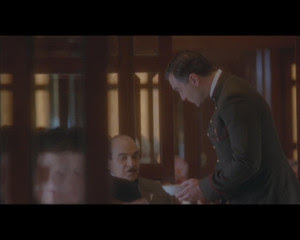
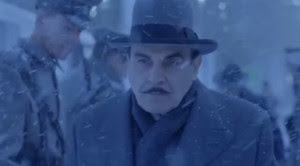
"MURDER ON THE ORIENT EXPRESS" (2010) Image Gallery


Below are images from "MURDER ON THE ORIENT EXPRESS", the 2010 adaptation of Agatha Christie's famous 1934 novel. The television movie starred David Suchet as Hercule Poirot. 


"MURDER ON THE ORIENT EXPRESS" (2010) Image Gallery


750239_original


750365_original


855595_300


article-0-0C9180F2000005DC-637_468x428


article-1333459-0C377EAB000005DC-648_306x548 (1)


david-suchet-and-the-crowd


david-suchet-as-hercule-poirot


MURDER_ON_THE_ORIENT_EXPRESS_40


MURDER_ON_THE_ORIENT_EXPRESS_49


orient-express


poirot_snow


This_Devil