Thursday, August 12, 2021
"END OF WATCH" (2012) Photo Gallery
Below are images from the 2012 crime thriller called "END OF WATCH". Directed by David Ayer, the movie stars Jake Gyllenhaal and Michael Peña:
Monday, August 9, 2021
"TITANIC" (1953) Review

"TITANIC" (1953) Review
As many moviegoers know, there have been numerous film and television productions about the maiden voyage and sinking of the R.M.S. Titanic on April 15, 1912. The most famous production happens to be James Cameron's 1997 Oscar winning opus. However, I do wonder if there are any fans who are aware that another Titanic movie managed to strike Oscar gold.
Directed by Jean Negulesco, the 1953 movie "TITANIC" focused on the personal lives of a wealthy American family torn asunder by marital strife, a deep secret and the historic sinking of the Titanic. Family matriarch Mrs. Julia Sturges and her two children, 17 year-old Annette and 10 year-old Norman board the R.M.S. Titanic in Cherbourg, France. Julia hopes to remove her children from the influence of a privileged European lifestyle embraced by her husband Richard and raise them in her hometown of Mackinac, Michigan. Unfortunately, Richard gets wind of their departure and manages to board the Titanic at the last moment by purchasing a steerage ticket from a Basque immigrant and intercept his family. The Sturges family also meet other passengers aboard ship:
*20 year-old Purdue University tennis player Gifford Rogers, who falls for Annette
*the wealthy middle-aged Maude Young (based upon Molly Brown)
*a social-climbing snob named Earl Meeker
*a priest named George S. Healey, who has been defrocked for alcoholism
*American businessman John Jacob Astor IV and his second wife Madeleine
Julia and Richard clash over the future of their children during the voyage. Their conflict is reinforced by Annette's budding romance with college student Gifford Rogers and a dark secret revealed by Julia. But the couple's conflict eventually takes a back seat after the Titanic strikes an iceberg during the last hour of April 14, 1912.
There seemed to be a habit among moviegoers lately to judge historical dramas more on their historical accuracy than on the story. As a history buff, I can understand this penchant. But I am also a fan of fiction - especially historical fiction. And I learned a long time ago that when writing a historical drama, one has to consider the story and the character over historical accuracy. If the latter gets in the way of the story . . . toss it aside. It is apparent that screenwriters Charles Brackett (who also served as producer), Richard L. Breen and Walter Reisch did just that when they created the screenplay for "TITANIC". Any history buff about the famous White Star liner's sinking would be appalled at the amount of historical accuracy in this movie. However, I feel that many lovers of period drama would be more than satisfied with "TITANIC", thanks to a well-written personal story and top-notch direction by Jean Negulesco.
Superficially, "TITANIC" is a melodrama about the disintegration of a late 19th century/early 20th century marriage. The marital discord between Julia and Richard Sturges is filled with personality clashes, class warfare, disappointment and betrayal. And actors Barbara Stanwyck and Clifton Webb did their very best to make the clash of wills between husband and wife fascinating and in the end . . . poignant. One of the movie's best scenes featured a confession from one spouse about a past discretion. I am not claiming that the scene was particularly original. But I cannot deny that thanks to stellar performances from Stanwyck and Webb, I believe it was one of the best moments of melodrama I have ever seen on screen . . . period. But their final scene together, during the Titanic's sinking, turned out to be one of the most poignant for me. And by the way, fans of the 1997 movie would not be hard pressed to recognize one of Webb's lines in the film . . . a line that also ended up in Cameron's movie.
"TITANIC" featured other subplots that allowed the supporting cast to shine. Audrey Dalton portrayed Julia and Richard's oldest offspring, the beautiful 17 year-old Annette, who had become enamored of her father's penchant for European high society. Dalton did an excellent job of slowly transforming Annette from the shallow socialite wannabe to the shy and naturally charming young woman who has become more interested in enjoying her youth. And the character's transformation came about from her budding friendship and romance with the gregarious Gifford Rogers. Robert Wagner seemed a far cry from the sophisticated man that both moviegoers and television viewers have come to know. His Gifford is young, friendly and open-hearted. Wagner made it easier for moviegoers to see why Annette fell for him and Julia found him likeable. However, I was not that enthusiastic about his singing. Harper Carter did an excellent job of holding his own against the likes of Stanwyck, Webb and Dalton as the Sturges' son Norman. In fact, I found him very believable as the 10 year-old boy eager to maintain his father's interest without accepting the snobbery that marked Annette's personality. Perhaps he was simply too young.
The movie's screenplay also featured a subplot involving a young priest named George Healey, who dreaded his return to the U.S. and facing his family with the shameful news of his defrocking. Thanks to Richard Basehart's subtle, yet sardonic performance, I found myself feeling sympathetic toward his plight, instead of disgusted by his alcoholism. Thelma Ritter gave her usual top-notch performance as the sarcastic noveau riche Maude Young. Allyn Joslyn was amusing as the social-climbing card shark, Earl Meeker. And Brian Aherne's portrayal of the Titanic's doomed captain, was not only subtle, but he also kept the character from wallowing into some kind of second-rate nobility that usually makes my teeth hurt.
For a movie that did not have James Cameron's advantages of creating the technical effects of the 1997 movie, "TITANIC" proved to be an attractive looking movie. Production manager Joseph C. Behm and his team did a solid job of re-creating life aboard an ocean liner, circa 1912. Behm was also assisted by costume designer Dorothy Jeakins, Don B. Greenwood's art department, Maurice Ransford and Oscar winner Lyle R. Wheeler's art directions, and Stuart A. Reiss' set decorations. Although the movie did not feature an accurate re-creation of the Titanic's sinking, I have to admit that visually, the special effects created by a team team led by Ray Kellogg were very impressive, especially for 1953. They were ably assisted Joseph MacDonald's black-and-white photography and Louis R. Loeffler's editing.
Earlier in this review, I pointed out that James Cameron's 1997 film was not the only one about the Titanic that struck Oscar gold. Although "TITANIC" did not win eleven Academy Awards, it was nominated for two Oscars and won a single one - namely a Best Original Screenplay award for Brackett, Breen and Reisch. But despite an award winning script, a superb cast led by Barbara Stanwyck and Clifton Webb and a first-rate production team, "TITANIC" still could have ended in disaster. But it had the good luck to have an excellent director like Jean Negulesco at the helm.
Sunday, June 27, 2021
Five Favorite Episodes of "STAR TREK VOYAGER" Season Two (1995-1996)

Below is a list of my five favorite episodes from Season Two of "STAR TREK VOYAGER". Created by Rick Berman, Michael Piller and Jeri Taylor; the series starred Kate Mulgrew as Captain Kathryn Janeway:
FIVE FAVORITE EPISODES OF "STAR TREK VOYAGER" SEASON TWO (1995-1996)

1. (2.11) "Manuevers" - After a team of the Kazon-Nistrim warriors steal some Federation technology during a raid against U.S.S. Voyager, Commander Chakotay goes after them on his own and is captured. Martha Hackett and Anthony De Longis guest-starred.

2. (2.21) "Deadlock" - While attempting to evade the organ-stealing Vidiians, a duplicate Voyager is created after it passes through a spatial scission; leaving one of the duplicate ships under attack and the other impervious to attack. Nancy Hower and Simon Billig guest-starred.

3. (2.20) "Investigations" - Lieutenant Tom Paris leaves Voyager and joins a Talaxian space convoy. But when he is kidnapped by former crew mate Seska and the Kazon-Nistrim, Neelix tries to flush out the traitor on board who has been colluding with them. Raphael Sbarge, Martha Hackett and Simon Billig guest-starred.

4. (2.05) "Non-Sequitur" - While on an Away mission, Ensign Harry Kim mysteriously wakes up and finds himself back in 24th century San Francisco, with no record of him ever joining Voyager's crew. Louis Giambalvo, Jennifer Gatti and Mark Kiely guest-starred.

5. (2.19) "Lifesigns" - Voyager picks up a dying Vidiian woman and the Doctor saves her life by placing her consciousness in a holographic body. As the pair attempts to find a cure for the Phage killing her and her species, he falls in love. Susan Diol, Raphael Sbarge and Martha Hackett guest-starred.

Honorable Mention: (2.08) "Persistence of Vision" - When Voyager enters a new region of space, the crew begins to experience hallucinations from their past and of their desires. Carolyn Seymour, Warren Munson and Marva Hicks guest-starred.
Wednesday, June 23, 2021
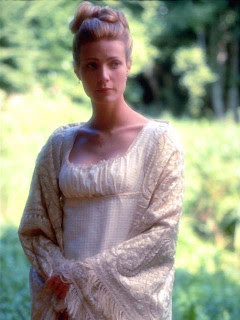
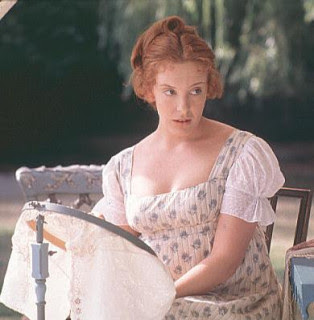
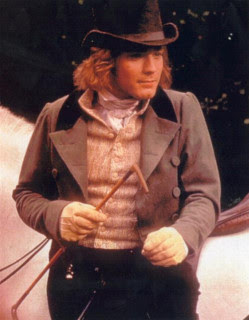
"EMMA" (1996) Photo Gallery
Here is a gallery of photos from the 1996 movie adaptation of "EMMA". Based upon Jane Austen's novel, the movie starred Gwenyth Paltrow, Jeremy Northam and Toni Collette. Douglas McGrath directed:
Friday, June 18, 2021
"I'LL NEVER FORGET YOU" (1951) Review

"I'LL NEVER FORGET YOU" (1951) Review
I have seen my share of time travel movies and television programs over the years. But I do not believe that I have never seen one as ethereal as the 1951 movie called "I'LL NEVER FORGET YOU".
A second adaptation of John L. Balderston's 1927 play, which was an adaptation of Henry James' incomplete novel, "The Sense of the Past"; "I'LL NEVER FORGET YOU" told the story of an American nuclear physicist named Dr. Peter Standish, who is transported to London of the late 18th century. The story begins when a co-worker of Peter's with the British nuclear program, Dr. Roger Forsyth, expresses concern about the former's lack of social life. As the two become friends, Peter reveals that he had inherited an old house located at London's Berkeley Square by a distant relative. He also also reveals that he was a descendant of an American Tory who had immigrated to Britain after the Revolutionary War to marry a cousin named Kate Pettigrew. Not long after this revelation, a thunderstorm sends Peter back to 1784, where he takes the place of his late 18th century ancestor, the other Peter Standish.
However, once 20th century Peter settles into his new life, he is struck by a series of surprises. One, he finds himself slowly falling in love with his fiancée's younger sister, Helen Pettigrew. Peter discovers that Georgian era London is not the paradise he had assumed it to be for years. He also realizes that his occasional lapses of judgment, in which he uses modern day language and revealing information he could not have known if he had actually grown up in the 18th century. Peter's occasional lapses and his feelings for Helen lead to growing antagonism toward him from not only his fiancée Kate, but also from Mr. Throstle, the man to whom Helen had been promised; leading to potential disaster for him.
I am usually a big fan of time travel movies. But if I must be honest, my reason for watching "I'LL NEVER FORGET YOU" stemmed from sheer curiosity and nothing else. I never really thought I would be impressed by this movie. And I was . . . much to my surprise. Mind you, the film's method of time travel - a bolt of lightning - struck me as unrealistic, even from a fictional point of view. There was no machine or vehicle like a Delorean to channel the energy from that bolt of lightning. Instead, the Peter Standish was struck by lightning and transported some 160 years back to the past. That he survived being struck is a miracle.
Nevertheless, I still enjoyed "I'LL NEVER FORGET YOU" very much. At its heart, the movie featured two genres - time traveling and romance. And both seemed to intertwine perfectly, thanks to director Roy Ward Baker, who directed the 1958 classic, "A NIGHT TO REMEMBER". There have been time travel movies in which the protagonists are slightly taken aback by the "primative" conditions of the time period in which they end up. But I found Peter Standing's reaction to the reality of 18th century London rather enjoyable on a perverse level. I found it satisfying to watch him come to the realization that 1784 London was not the social paradise that he had assumed it was. "I'LL NEVER FORGET YOU" is also one of the rare works of fiction that pointed out the lack of decent hygiene that permeated Western society before the 20th century. Between Peter's disgust at London society's array of body odors and their bafflement at his habit of a daily bath, I was nearly rolling on the floor with laughter. But more importantly, "I'LL NEVER FORGET" is a poignant love story between Peter and Helen. What made it very satisfying for me is that Helen was the only one who seemed to have a bead on Peter's personality. More importantly, she seemed to be interested in Peter's comments about the future, instead of repelled by them.
But what really made the romance between Peter Standing and Helen Pettigrew worked were the performances of the two leads, Tyrone Power and Ann Blyth. Thanks to their intelligent and subtle performances, they made Peter and Helen's love story believable. I was surprised that Michael Rennie had such a small screen presence in the movie, considering that he had received third billing. Nevertheless, I thought he gave a pretty good performance as Peter's 20th century friend and colleague, Dr. Roger Forsyth. Another performance that caught my attention came from Dennis Price, who gave a very entertaining performance as Helen and Kate's brother, a dye-in-the-wool late 18th century cad, Tom Pettigrew. Kathleen Byron gave an energetic and brief performance as Georgiana Cavendish, Duchess of Devonshire. The movie also featured solid performances from Beatrice Campbell, Raymond Huntley and Irene Browne, who not only portrayed the Pettigrew matriarch in this film, but also in the 1933 version, "BERKELEY SQUARE".
Although I found the mode of time travel rather implausible - being struck by lightning, I must admit that I enjoyed "I'LL NEVER FORGET YOU". In fact, I enjoyed it a lot more than I thought I would. And I have to thank Ranald MacDougall's adaptation of John L. Balderston's play, intelligent performances from a cast led by Tyrone Power and Ann Blyth, and more importantly, intelligent and subtle direction from Roy Ward Baker.
Thursday, June 3, 2021
Scotch Egg
Below is an article about the British snack known as Scotch Egg:
SCOTCH EGG
When I first learned about the dish known as Scotch Egg, I had assumed that it had originated in Scotland. Silly me. Basically a snack, the Scotch Egg is usually served at picnics or inside pubs. Today, the Scotch Egg can be found at supermarkets, corner shops and motorway service stations throughout Great Britain. Here in the United States, they can be found at British-style pubs and eateries. They are usually served with hot dipping sauces such as ranch dressing, hot sauce, or hot mustard sauce.
Many food historians claim that the exact origin of the Scotch Egg is unknown. Many believe that it might be a descendant of a form of the Mughlai dish called "nargisi kofta". However, the London Department store, Fortnum & Mason, claims it was inspired by the "nargisi kofta" and invented the Scotch Egg in 1738.
The recipe for the Scotch Egg first appeared in the 1809 edition of Mrs. Rundell's 1806 cookbook, "A New System of Domestic Cookery". Mrs. Rundell and later 19th-century cookbook authors usually instructed their readers to served the Scotch Eggs hot and with gravy.
Below is a recipe from the Allrecipes.com website:
Scotch Egg
Ingredients
1 quart oil for frying
4 eggs
2 pounds pork sausage
4 cups dried bread crumbs, seasoned
1 cup all-purpose flour
4 eggs, beaten
Preparations
Preheat oven to 350 degrees F (175 degrees C). Heat oil in deep-fryer to 375 degrees F (190 degrees C).
Place eggs in saucepan and cover with water. Bring to boil. Cover, remove from heat, and let eggs sit in hot water for 10 to 12 minutes. Remove from hot water, cool and peel.
Flatten the sausage and make a patty to surround each egg. Very lightly flour the sausage and coat with beaten egg. Roll in bread crumbs to cover evenly.
Deep fry until golden brown, or pan fry while making sure each side is well cooked. Bake in the preheated oven for 10 minutes.
Cut in half and serve over a bed of lettuce and sliced tomatoes for garnish. If mustard is desired it looks beautiful over this.
Subscribe to:
Posts (Atom)