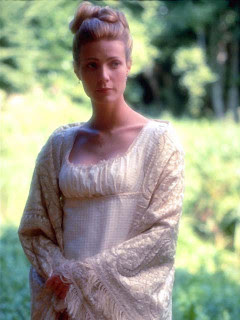
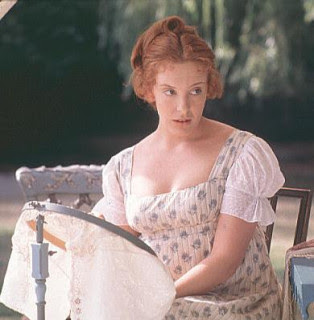
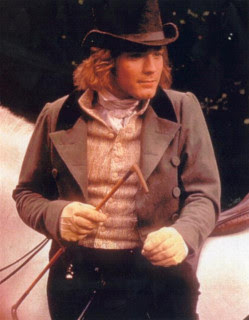
Here is a gallery of photos from the 1996 movie adaptation of "EMMA". Based upon Jane Austen's novel, the movie starred Gwenyth Paltrow, Jeremy Northam and Toni Collette. Douglas McGrath directed:
Wednesday, June 23, 2021
"EMMA" (1996) Photo Gallery
Friday, June 18, 2021
"I'LL NEVER FORGET YOU" (1951) Review

"I'LL NEVER FORGET YOU" (1951) Review
I have seen my share of time travel movies and television programs over the years. But I do not believe that I have never seen one as ethereal as the 1951 movie called "I'LL NEVER FORGET YOU".
A second adaptation of John L. Balderston's 1927 play, which was an adaptation of Henry James' incomplete novel, "The Sense of the Past"; "I'LL NEVER FORGET YOU" told the story of an American nuclear physicist named Dr. Peter Standish, who is transported to London of the late 18th century. The story begins when a co-worker of Peter's with the British nuclear program, Dr. Roger Forsyth, expresses concern about the former's lack of social life. As the two become friends, Peter reveals that he had inherited an old house located at London's Berkeley Square by a distant relative. He also also reveals that he was a descendant of an American Tory who had immigrated to Britain after the Revolutionary War to marry a cousin named Kate Pettigrew. Not long after this revelation, a thunderstorm sends Peter back to 1784, where he takes the place of his late 18th century ancestor, the other Peter Standish.
However, once 20th century Peter settles into his new life, he is struck by a series of surprises. One, he finds himself slowly falling in love with his fiancée's younger sister, Helen Pettigrew. Peter discovers that Georgian era London is not the paradise he had assumed it to be for years. He also realizes that his occasional lapses of judgment, in which he uses modern day language and revealing information he could not have known if he had actually grown up in the 18th century. Peter's occasional lapses and his feelings for Helen lead to growing antagonism toward him from not only his fiancée Kate, but also from Mr. Throstle, the man to whom Helen had been promised; leading to potential disaster for him.
I am usually a big fan of time travel movies. But if I must be honest, my reason for watching "I'LL NEVER FORGET YOU" stemmed from sheer curiosity and nothing else. I never really thought I would be impressed by this movie. And I was . . . much to my surprise. Mind you, the film's method of time travel - a bolt of lightning - struck me as unrealistic, even from a fictional point of view. There was no machine or vehicle like a Delorean to channel the energy from that bolt of lightning. Instead, the Peter Standish was struck by lightning and transported some 160 years back to the past. That he survived being struck is a miracle.
Nevertheless, I still enjoyed "I'LL NEVER FORGET YOU" very much. At its heart, the movie featured two genres - time traveling and romance. And both seemed to intertwine perfectly, thanks to director Roy Ward Baker, who directed the 1958 classic, "A NIGHT TO REMEMBER". There have been time travel movies in which the protagonists are slightly taken aback by the "primative" conditions of the time period in which they end up. But I found Peter Standing's reaction to the reality of 18th century London rather enjoyable on a perverse level. I found it satisfying to watch him come to the realization that 1784 London was not the social paradise that he had assumed it was. "I'LL NEVER FORGET YOU" is also one of the rare works of fiction that pointed out the lack of decent hygiene that permeated Western society before the 20th century. Between Peter's disgust at London society's array of body odors and their bafflement at his habit of a daily bath, I was nearly rolling on the floor with laughter. But more importantly, "I'LL NEVER FORGET" is a poignant love story between Peter and Helen. What made it very satisfying for me is that Helen was the only one who seemed to have a bead on Peter's personality. More importantly, she seemed to be interested in Peter's comments about the future, instead of repelled by them.
But what really made the romance between Peter Standing and Helen Pettigrew worked were the performances of the two leads, Tyrone Power and Ann Blyth. Thanks to their intelligent and subtle performances, they made Peter and Helen's love story believable. I was surprised that Michael Rennie had such a small screen presence in the movie, considering that he had received third billing. Nevertheless, I thought he gave a pretty good performance as Peter's 20th century friend and colleague, Dr. Roger Forsyth. Another performance that caught my attention came from Dennis Price, who gave a very entertaining performance as Helen and Kate's brother, a dye-in-the-wool late 18th century cad, Tom Pettigrew. Kathleen Byron gave an energetic and brief performance as Georgiana Cavendish, Duchess of Devonshire. The movie also featured solid performances from Beatrice Campbell, Raymond Huntley and Irene Browne, who not only portrayed the Pettigrew matriarch in this film, but also in the 1933 version, "BERKELEY SQUARE".
Although I found the mode of time travel rather implausible - being struck by lightning, I must admit that I enjoyed "I'LL NEVER FORGET YOU". In fact, I enjoyed it a lot more than I thought I would. And I have to thank Ranald MacDougall's adaptation of John L. Balderston's play, intelligent performances from a cast led by Tyrone Power and Ann Blyth, and more importantly, intelligent and subtle direction from Roy Ward Baker.
Thursday, June 3, 2021
Scotch Egg
Below is an article about the British snack known as Scotch Egg:
SCOTCH EGG
When I first learned about the dish known as Scotch Egg, I had assumed that it had originated in Scotland. Silly me. Basically a snack, the Scotch Egg is usually served at picnics or inside pubs. Today, the Scotch Egg can be found at supermarkets, corner shops and motorway service stations throughout Great Britain. Here in the United States, they can be found at British-style pubs and eateries. They are usually served with hot dipping sauces such as ranch dressing, hot sauce, or hot mustard sauce.
Many food historians claim that the exact origin of the Scotch Egg is unknown. Many believe that it might be a descendant of a form of the Mughlai dish called "nargisi kofta". However, the London Department store, Fortnum & Mason, claims it was inspired by the "nargisi kofta" and invented the Scotch Egg in 1738.
The recipe for the Scotch Egg first appeared in the 1809 edition of Mrs. Rundell's 1806 cookbook, "A New System of Domestic Cookery". Mrs. Rundell and later 19th-century cookbook authors usually instructed their readers to served the Scotch Eggs hot and with gravy.
Below is a recipe from the Allrecipes.com website:
Scotch Egg
Ingredients
1 quart oil for frying
4 eggs
2 pounds pork sausage
4 cups dried bread crumbs, seasoned
1 cup all-purpose flour
4 eggs, beaten
Preparations
Preheat oven to 350 degrees F (175 degrees C). Heat oil in deep-fryer to 375 degrees F (190 degrees C).
Place eggs in saucepan and cover with water. Bring to boil. Cover, remove from heat, and let eggs sit in hot water for 10 to 12 minutes. Remove from hot water, cool and peel.
Flatten the sausage and make a patty to surround each egg. Very lightly flour the sausage and coat with beaten egg. Roll in bread crumbs to cover evenly.
Deep fry until golden brown, or pan fry while making sure each side is well cooked. Bake in the preheated oven for 10 minutes.
Cut in half and serve over a bed of lettuce and sliced tomatoes for garnish. If mustard is desired it looks beautiful over this.
Wednesday, May 26, 2021
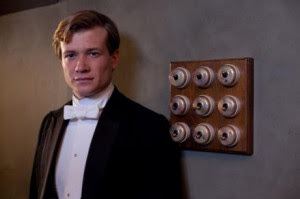
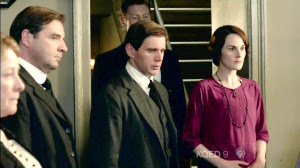
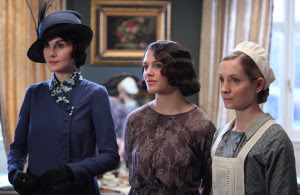
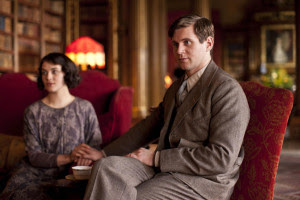
"DOWNTON ABBEY" Series Three (2012) Photo Gallery
Below are images from Series Three of the ITV series, "DOWNTON ABBEY", created by Julian Fellowes:
Wednesday, May 19, 2021
"THE BLUE DAHLIA" (1946) Review

"THE BLUE DAHLIA" (1946) Review
Sometime during World War II, novelist Raymond Chandler was hired by Paramount Pictures to co-write the 1944 film classic, "DOUBLE INDEMNITY", with writer-director Billy Wilder. Another two years passed before the studio assigned him to write a post-war film noir movie, 1946’s "THE BLUE DAHLIA".
Directed by George Marshall, ”THE BLUE DAHLIA” was about a U.S. Navy pilot, Lieutenant-Commander Johnny Morrison, who returns home to Los Angeles with his buddies and medically discharged crewmates, Buzz Wanchek and George Copeland. Buzz is prone to memory lapses and headaches, and is often short tempered, all likely due to his head wound. Johnny finds his wife Helen living and partying in a hotel bungalow. He also spots her kissing her boyfriend, owner of the Blue Dahlia nightclub, Eddie Harwood. After punching Eddie, Johnny lets Helen know that he is willing to try to salvage their marriage. However, Helen is not willing and she informs him that their son did not die of dipththeria as she had written, but from a car accident caused by her when she was drunk. Johnny momentarily threatens her with a gun, but decides she is not worth the trouble. He leaves her, taking a framed photograph of their son. Helen meets both Buzz (who has been searching for Johnny) and Eddie before she is mysteriously shot to death in the stomach.
”THE BLUE DAHLIA” is a pretty solid murder mystery that featured the second of three movies with Alan Ladd and Veronica Lake. Chandler created some very interesting characters, including the smarmy Eddie Harwood, who seemed very adept at seducing married wives like Helen Morrison and hiring others to do his dirty work; Helen Morrison, who seemed like a curious mixture of a bitchy wife and a grieving mother; the solid Johnny Morrison, who manages to radiate an aura of menace when crossed; and the nosy and sharp-tongued hotel detective, “Dad” Newell. But Chandler’s best creation turned out to be Buzz Wanchek, a loyal, Navy veteran with a short temper, dislike of jazz music and a metal plate in his head.
As I had stated earlier, Chandler’s story proved to be pretty solid. His skillful setup of Helen Morrison’s murder made it easy for many of the characters to become suspects. Johnny’s discovery of her affair with Eddie Harwood and their subsequent violent quarrel made him an easy suspect. The script eventually revealed that Helen had discovered that Eddie Harwood was a wanted fugitive sought by the New Jersey cops for the death of a man during a robbery, fifteen years earlier. Johnny also met one Joyce Harwood, Eddie’s estranged wife, who had become weary of her husband’s infidelity. And finally there was Buzz, who had been seen meeting Helen at her hotel’s bar and following her to her bungalow. All of this had been witnessed by “Dad” Newell. I understand that Chandler had intended the mystery to evolve into a message about the difficulties – medical and otherwise – faced by veterans returning home from the war. This message would have been utilized with the revelation of Buzz as Helen’s killer. The movie also featured some brutal fight scenes between Ladd and the actors portraying Eddie Harwood’s thugs. In fact, I have noticed that a good number of brutal fights always seemed to pop up in many of Ladd’s movies. Director George Marshall certainly did justice to the fight scene in ”THE BLUE DAHLIA” that rivaled those found in other Ladd crime dramas.
Unfortunately, ”THE BLUE DAHLIA” had some flaws that prevented it from being better than it could. One, I found Sam Comer and James M. Walters Senior’s set decorations to be pedestrian . . . almost cheap looking. And Lionel Lindon’s uninspiring cinematography did not help. And the movie could have benefitted with a better score than the one provided by Victor Young, the same composer who won a posthumous Oscar for 1956’s ”AROUND THE WORLD IN 80 DAYS”. And thanks to the U.S. military and the Production Code Administration under Joseph Breen, Chandler was forced to neuter his script by tossing aside the resolution that made Buzz the murderer. Both Chandler and Marshall were forced to dump the crime on another character, in what seemed like a contrived plot twist.
If there is one thing that ”THE BLUE DAHLIA” benefitted was from its cast. Chandler had compared Alan Ladd to Warners star, Humphrey Bogart, to the former’s detriment. One, I have no idea why Chandler even bothered to compare the two actors. Both had their own styles as leading men in a crime drama. Ladd certainly gave a top-notch performance as returning veteran Johnny Morrison. His best scenes included one he shared with Doris Dowling that featured the bitter argument and marital breakup of the Morrisons; another with Howard Da Silva, in which Morrison revealed his knowledge of Harwood’s past as a wanted fugitive; and finally the fight scene between Johnny and Harwood’s thugs. Not only did he handle the fight scenes very well, he also proved that he could be a first-rate dramatic performer, who knew how to act in front of a camera.
Ladd received solid support from Veronica Lake, who gave a charming performance as the compassionate and perhaps, slightly manipulative Joyce Harwood, the nightclub owner’s estranged wife. I was very impressed by Doris Dowling’s portrayal of the morally conflicted Helen Morrison. Not only did she convey the woman’s bitchy personality with great effect, but also her lingering grief over her son’s death. Howard Da Silva was superb as nightclub owner Eddie Harwood. The actor did justice to Chandler’s portrayal of a man ruthless enough to deal with any threat to his livelihood, yet compassionate enough to feel remorse over his killing of an innocent man during a bank robbery. And character actor Will Wright gave a humorous and complex portrayal of the nosy and slimy house detective, “Dad” Newell. Hugh Beaumont gave a solid performance as one of Johnny’s friends, the level-headed and dependable George Copeland; but his portrayal did not exactly set me on fire. William Bendix’s portrayal of a slightly disturbed Buzz Wanchek. His performance struck me as funny, caustic and a bit frightening at times. He was very effective in conveying the aftereffects of a man who had not only been trained to kill, but whose war wound (which resulted in a metal plate in the head) led him to suffer from a great deal of mental stress.
Do not get me wrong. I enjoyed ”THE BLUE DAHLIA”. Chandler’s mystery struck me as solid and well written. And the movie benefited from a strong cast led by Alan Ladd. But it lacked any production values – set decorations, photography and score – that struck me as impressive. And in the end, the movie’s finale was undermined by censorship from the U.S. military and the local censor board. But I can honestly say that it is worth viewing.
Sunday, May 9, 2021
Top Five Favorite Episodes of “THE CROWN” Season Two (2017)

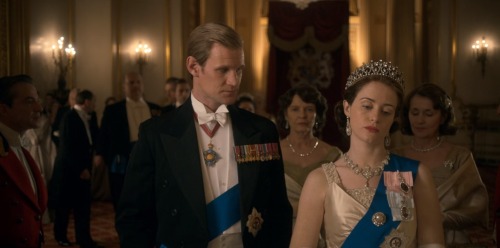
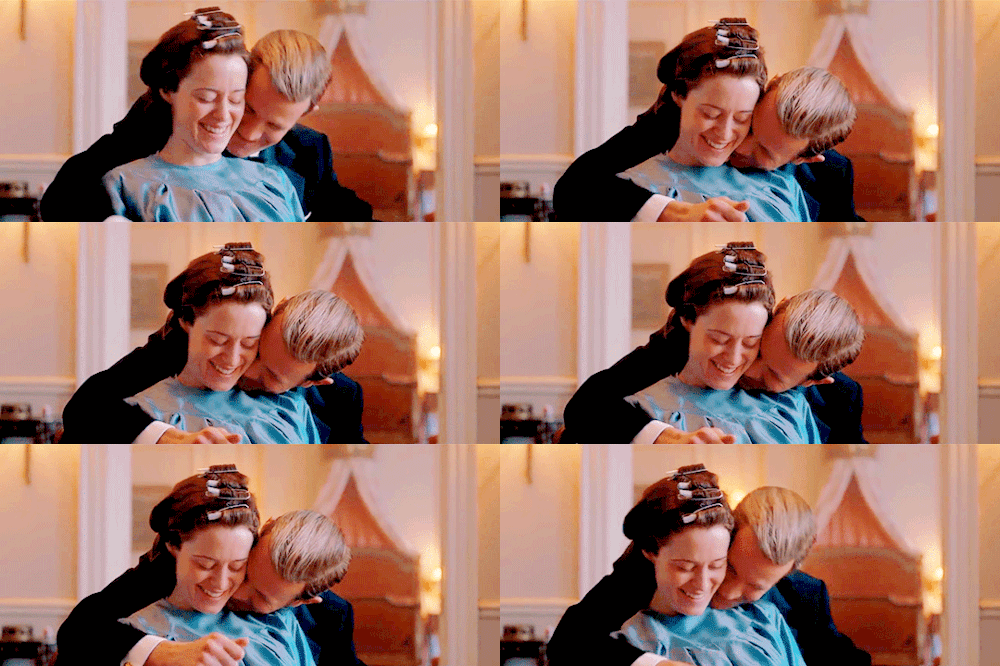
Below is a list of my favorite episodes from Season Two of the Netflix series, "THE CROWN". Created by Peter Morgan, the series starred Claire Foy and Matt Smith as Queen Elizabeth II and Prince Philip, Duke of Edinburgh:
TOP FIVE FAVORITE EPISODES OF "THE CROWN" SEASON TWO (2017)

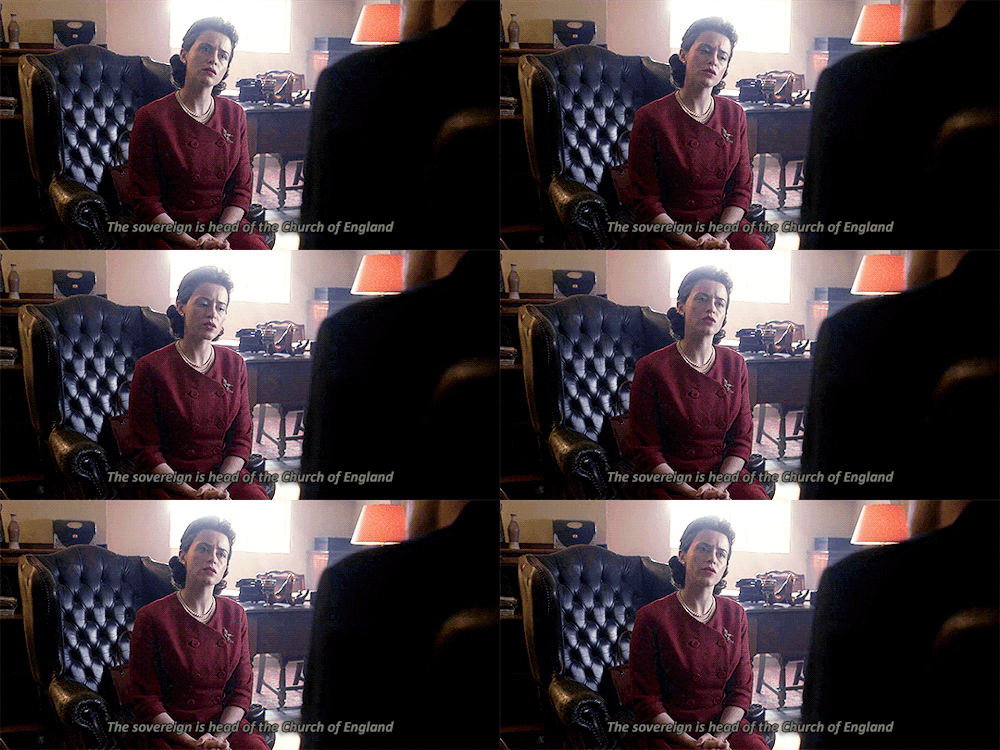
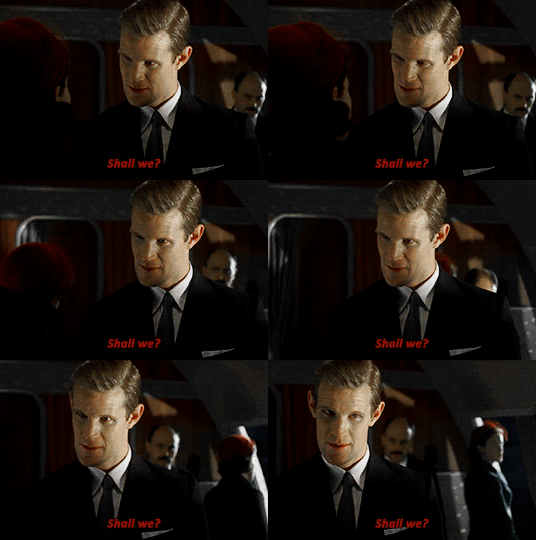
1. (2.05) "Marionettes" - After Queen Elizabeth II makes a tone-deaf speech at a Jaguar factory, she and the British monarchy come under public attack by an outspokern liberal peer named Lord Altrincham.

2. (2.03) "Lisbon" - Palace insiders try to prevent the scandalous divorce of the Duke of Edinburgh's aide, Lieutenant-Commander Mike Parker, that could reflect poorly on the former and the monarchy. Prime Minister Anthony Eden faces censure from his cabinet and the press over the Suez Crisis.

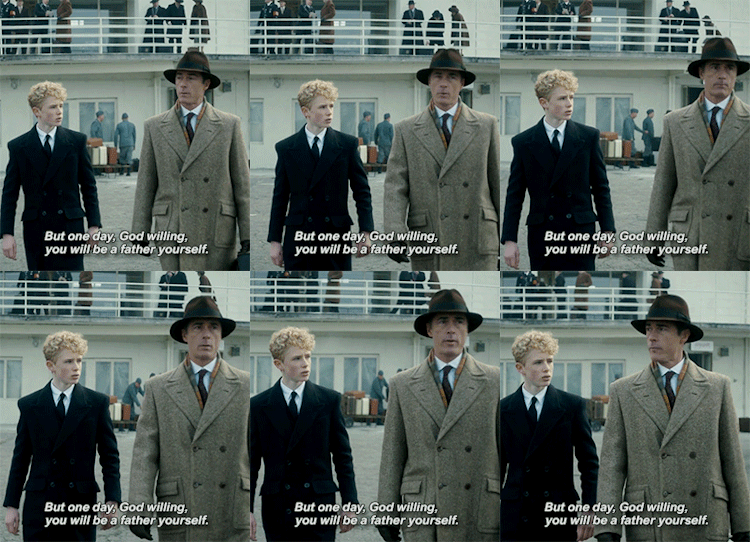
3. (2.09) "Paterfamilias" - Prince Philip insists that Prince Charles attend Gordonstoun, his alma mater in Scotland. Also, he reminisces about the life-changing difficulties he experienced there as a student.

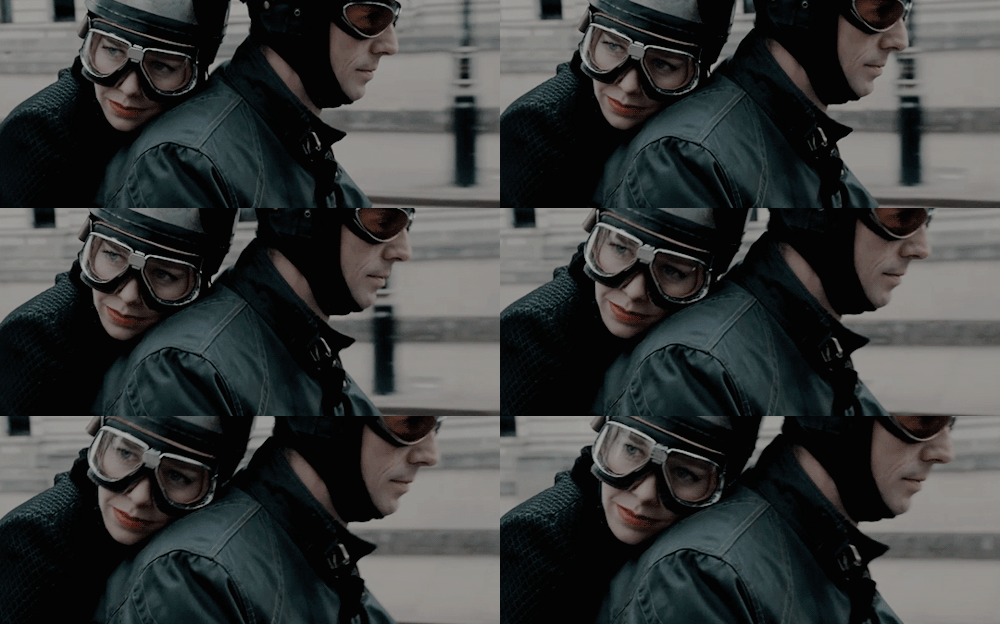
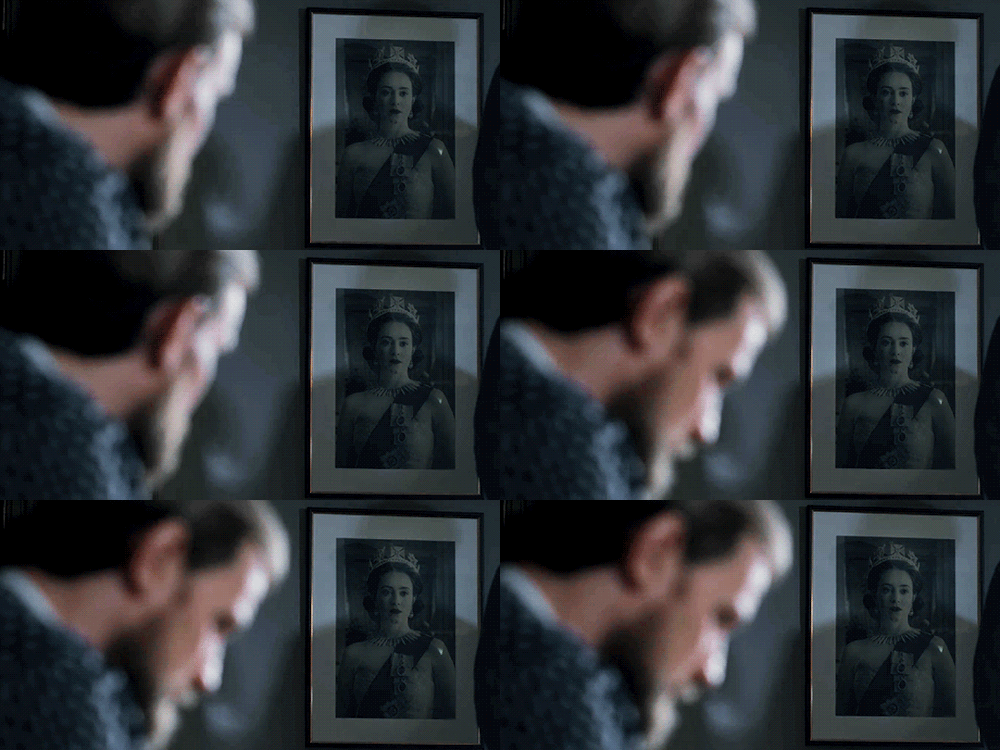
4. (2.07) "Matrimonium" - A heartbreaking letter from former lover Peter Townsend spurs Princess Margaret to make a bold proposal to her current lover, photographer Antony Armstrong-Jones. The Queen has good news that causes complications for Margaret.

5. (2.02) "A Company of Men" - Elizabeth feels disconnected from Philip during his five-month royal tour in the South Pacific. Meanwhile, Eden copes with ill health and international pressure to withdraw British troops from Egypt during the Suez Crisis.

Subscribe to:
Posts (Atom)